
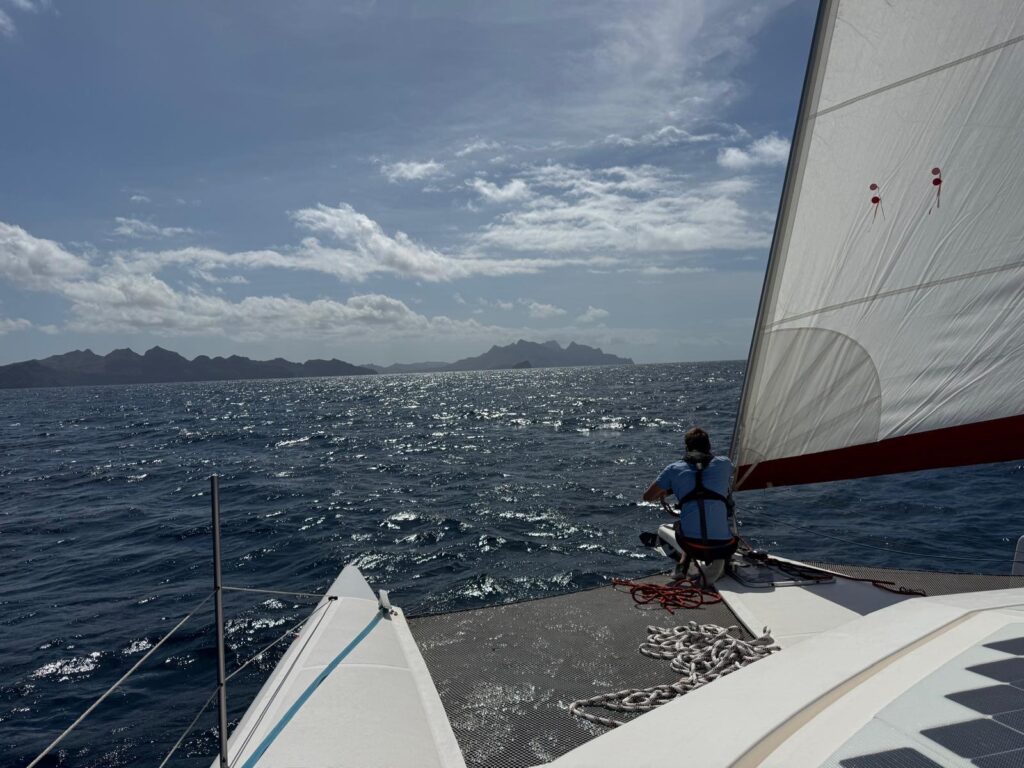
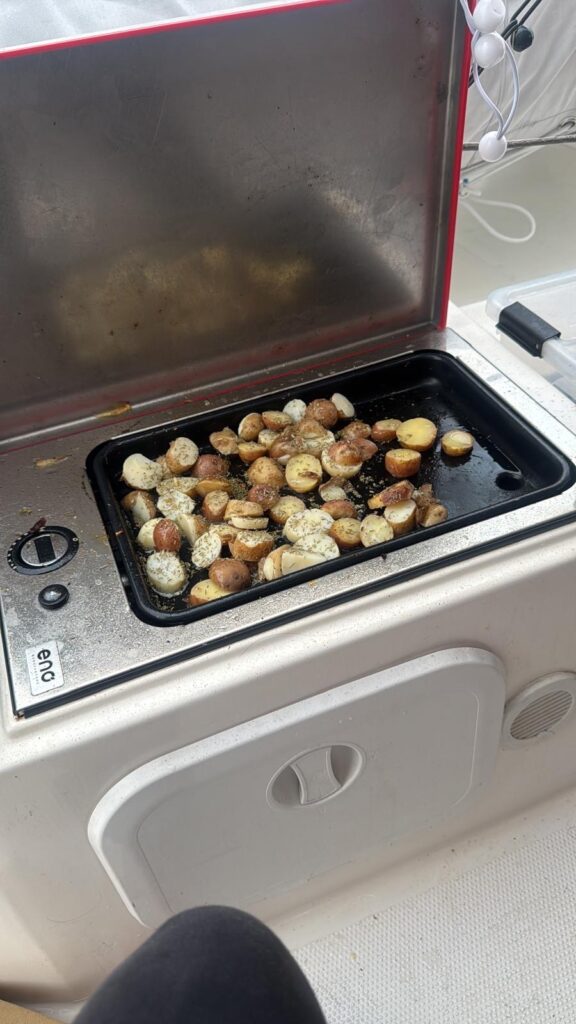
Another 20nm to Mindelo (Cape Verde), 800nm since La Palma. What a ride. Highs and lows are once again very close together. After the start, things got off to a bumpy start until we had the wind turbulence of the Canary Islands behind us. South of El Hierro we thought we would have to catch up with our Code-D because the wind was getting too strong, 30 minutes later we started the engine because the wind shifted and then fell asleep... That's how it goes, the mood was good, everyone was excited and happy that we were finally getting underway. La Palma was a great stop that I will report on later. In addition to two very exciting and beautiful visits to a permaculture farm and my distant aunt Sylvia and her husband, the stay was characterised by repairs and shopping. Our guests Alena and Nils left us, but our new crew arrived, consisting of Stephan, a young, dynamic Austrian, and Jannik and Tanja, an experienced German sailing couple. We got on well straight away and it felt great not having to do everything on our own. Together with Stephan, we drew up a list of post`its on which all the tasks to be completed before departure were listed. Jannik and Tanja adopted the system and our cabin door was quickly filled with around 30 Post`its. Quite a lot, but by joining forces we managed to move one note after the other from the "to-do" page to "done". Katja has already written about grub screws, and in the meantime we have also repaired the plancha, which could no longer be moved due to large amounts of salt water inside. It now also has a cover, so we are solving one problem after another in small steps.


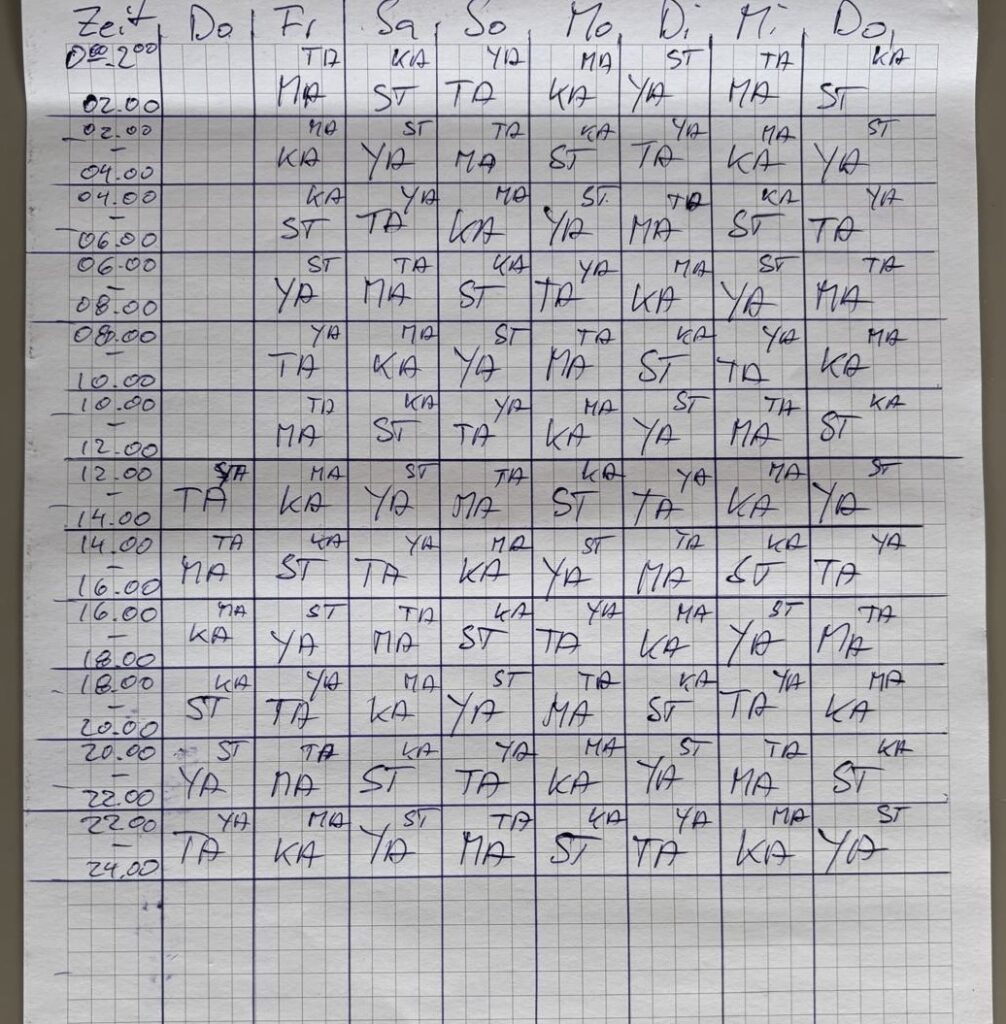
The first night on board is always something special. There are no routines yet, everyone is excited and the movements and noises on board are unfamiliar. Our watch schedule follows a system that my son Lennard developed five years ago: a watch lasts two hours and one crew member is responsible at the helm. The following two hours are back-up time, i.e. the crew member on watch is on standby in case there is something to do that requires several hands. The system works well, especially if you have good guards. The first night I was on from 0.00-02.00 and back-up from 02.00-04.00, so some sleep before and some after. I was pretty exhausted the next day, my watch had pulled me out of a deep sleep. The following night I was on watch from 20.00 - 22.00 and then again at 06.00. That was pretty perfect, close to my normal sleep rhythm, I could almost sleep through the night.
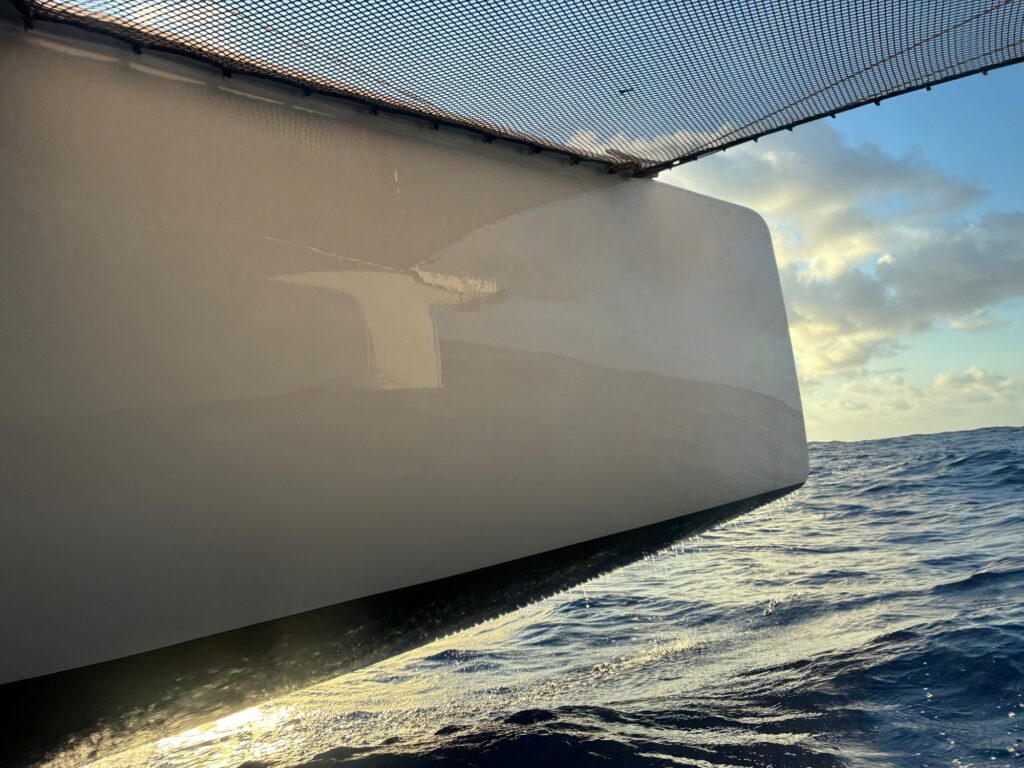

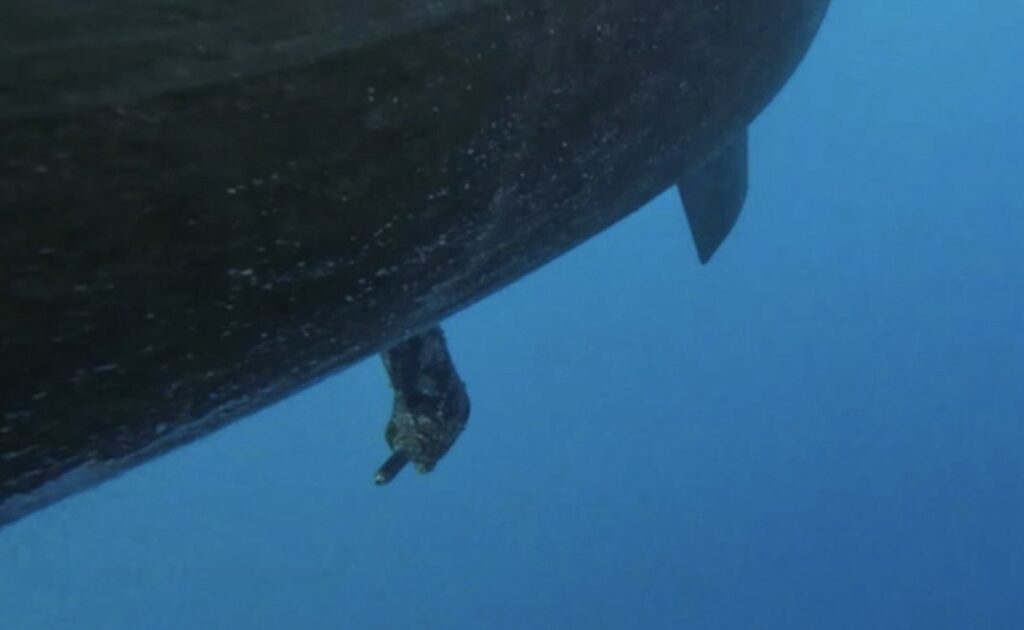
I was correspondingly rested and felt great the next day. We made good progress, using our Code-D, which propelled us along at 7-9 knots. To make sure that the halyard didn't chafe, we took the sail down once a day and moved the knot slightly so that the same part of the halyard didn't always chafe against the pulley in the masthead. Despite the furling system, recovering the sail is not easy, as it unrolls at the top when you furl it at the bottom in strong winds. It can happen that the sail is furled in the opposite direction and you end up with the image of an hourglass when setting it: with a belly at the bottom and a belly at the top, but constricted in the centre. We found a solution for this and prepared the sail on deck and then reduced the pressure in the sail with motor assistance. When the wind comes from behind, the airstream reduces the resulting true wind (from behind) and airstream (from the front), which is called apparent wind. With more airstream from the engine, we were able to reduce the apparent wind with which we were ultimately sailing and set the sail. However, when we tried to do this for the second time, we made an unpleasant discovery: the engine was not providing any propulsion! We checked the clutch cable and the engine behaviour and found no cause. Jannik's actioncam, which he held on a long pole in the water, then found the cause: Our propeller had left us! It was now probably lying somewhere at 4000 metres on the seabed, hopefully providing a home for as yet unexplored deep-sea inhabitants. It could no longer help us and we had to come to terms with the fact that we would have to make do without an engine for the remaining 600 miles or so. That's not a problem in principle, as we are a sailing boat. But the engine is of course essential for mooring and casting off, for bridging lulls and, of course, in emergencies. The whole crew took it in their stride and we increased caution on board. Falling overboard was already not an option and strictly forbidden, but without an engine, salvaging is a real challenge. A little note for mums, dads and other worried readers: This is also possible, so don't panic!
In the meantime, the Atlantic wave had grown to 3-4 metres and we had moderate winds of 18-20 knots, gusting to 25 knots. We made good time. We tried to find solutions for the propeller with the help of Starlink. During the daily inspection of the bilges (footwells of the hulls where water can potentially accumulate), Stephan realised that we had quite a lot of water in the rudder bilge. This had been the case once before, but should have been remedied by various measures. Obviously it wasn't. On the first day we scooped up 10 litres, on the second day 30 litres and on the following day 50 litres of water!
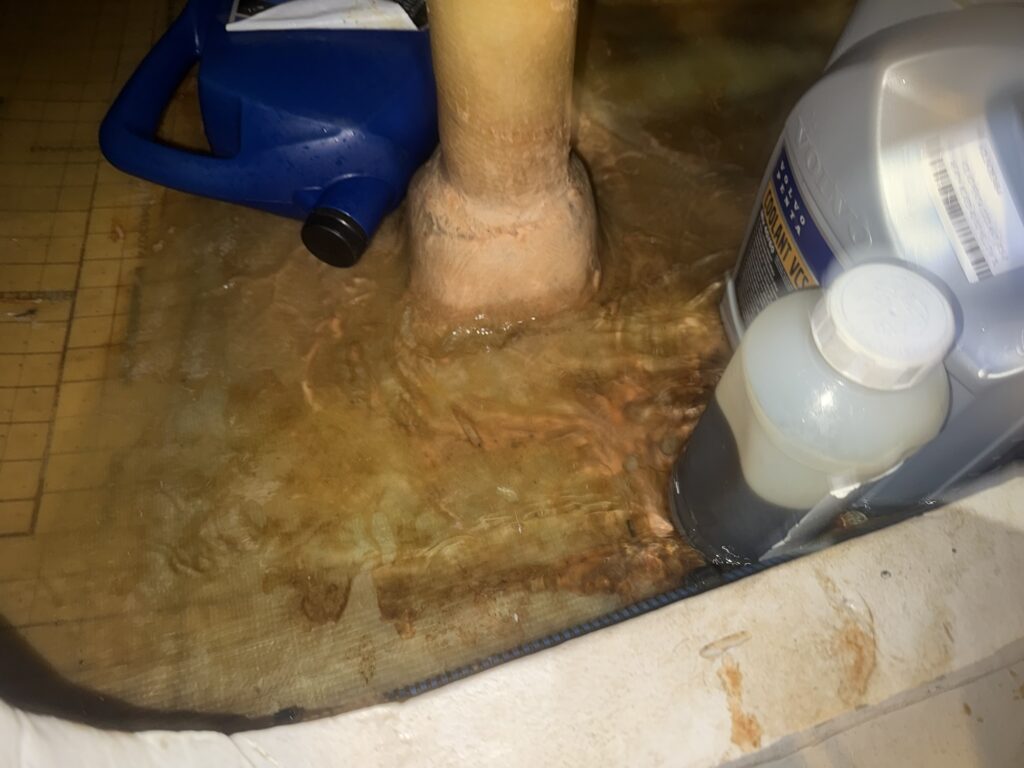
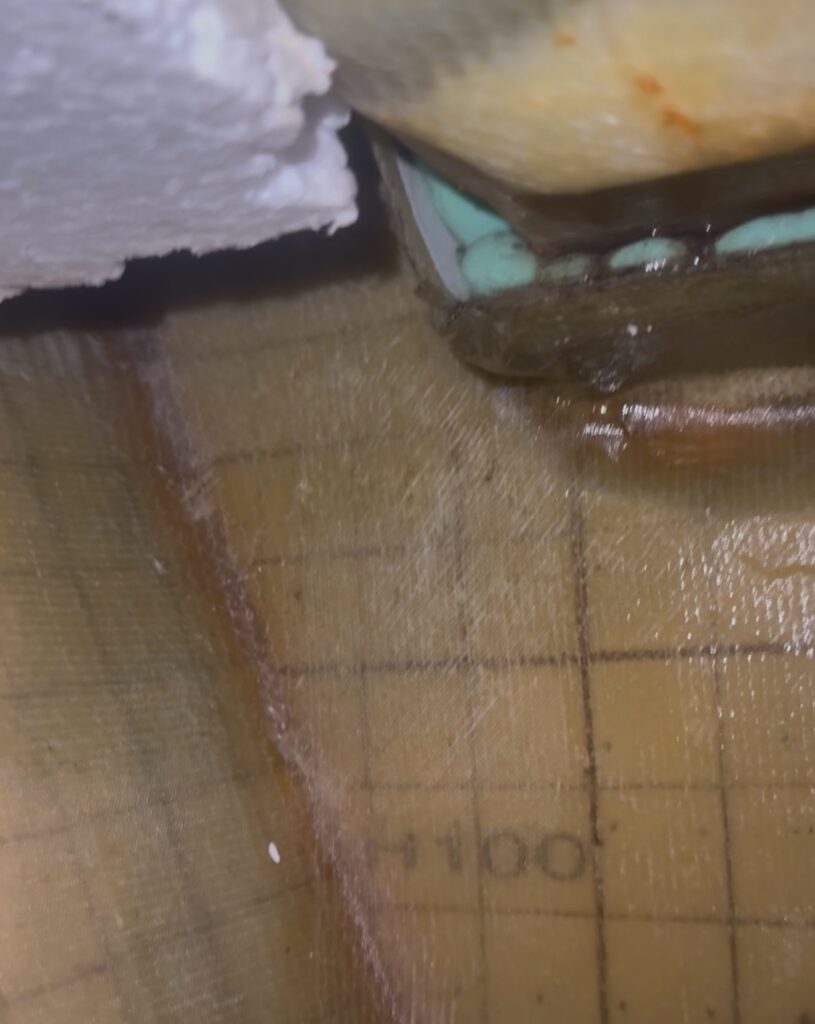
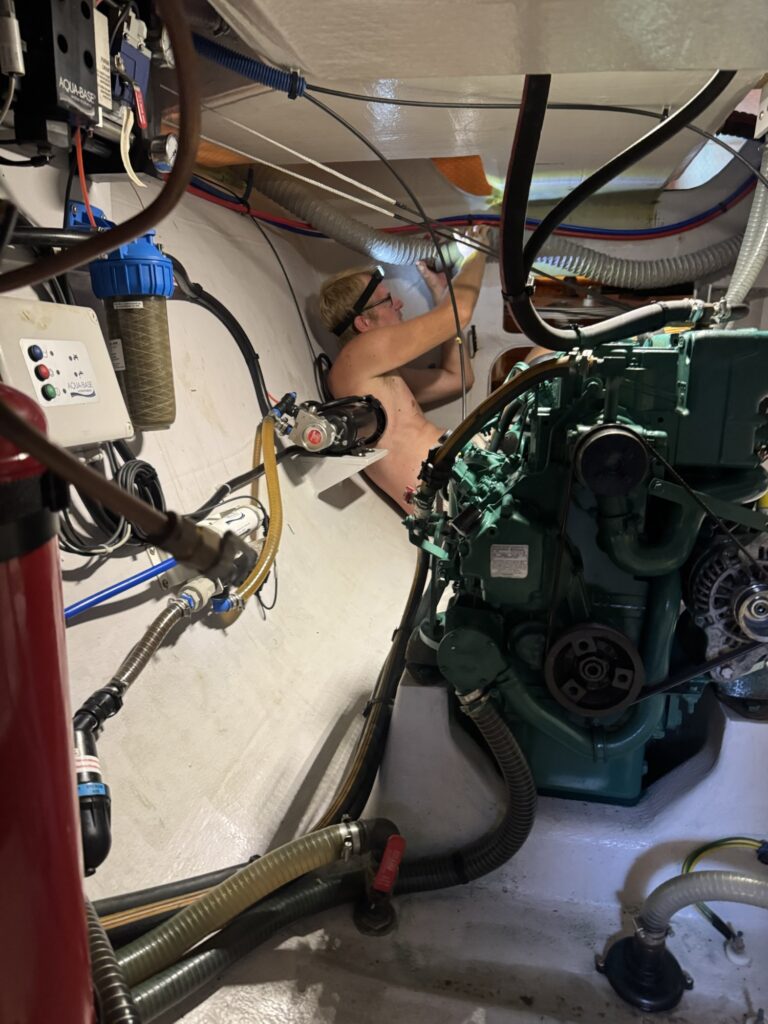
This is no longer a puddle and we contacted the shipyard to find the cause. The tricky thing is that this cannot be detected in the harbour, the water only penetrates when the sea is rough. A lot of swell = a lot of water, which also means that the amount of water was reduced again when the wave became smaller. So we scooped all the water out of the bilge, dried the floor and lined the relevant areas with kitchen paper. That's how we wanted to find the source. I call it boat yoga when I use my long legs to try to get past the engine to the rudder bilge and crouch down to investigate something. Katja then relieved me and heroically climbed into the last corner of the hull while the boat was swaying (the rudder is known to be far back...) and scooped and dried. Maxime from Neel, the manufacturer of the boat, joined us via WhatsApp video and together we searched. Finally, we saw a trickle of water from a polystyrene block at the stern of the boat. We had always wondered what was in this polystyrene block and only Maxime solved the mystery: Nothing! The blocks are mandatory additional buoyancy bodies, which seemed rather nonsensical given the size of the boat. Maxime then recommended that we tear off the blocks so that we could see where the water was penetrating behind them. That was the job of Stephan, the young, agile and yet calm and relaxed crew member from Austria. So Stephan climbed completely into the rowing area under the rowing quadrant, which was moving! After all, we were still travelling through the Atlantic at around 8 knots with 2-3m waves! The rudder quadrant is a wheel that transfers the movement of the steering lines to the rudder stock and is also used by the autopilot. So Stephan tore the polystyrene block from the transom (rear back wall) and lo and behold, small drops seeped out of the adhesive seam between the hulls and the deck. Compared to other solutions, this was a fairly simple solution that could not be solved underway, but should be feasible on the Cape Verde Islands.
The mood relaxed again and we enjoyed the journey, as long as the joy was not spoilt by slight seasickness, as was the case with one crew member. As a zone of light wind was to follow behind us, we endeavoured to go as fast as possible (at least the propeller was no longer slowing us down 😉). Motor assistance in calm conditions was no longer an option... We sailed as far downwind as possible so that we could gain more height when the wind dropped, which would give us speed. We set the mainsail 100nm before Mindelo, which is also a challenge without an engine. To set the sail, the boat has to be turned into the wind, i.e. with the bow in the direction of the wind. This only works well under sail if you have a mainsail and the sail's centre of pressure is far back. However, we wanted to set the mainsail first and with a headsail, whether code D or genoa, you can't get the nose into the wind. Normally you regulate this with the engine... So this is how it should work: We hoist the Code-D, set the genoa and use it to get as much speed as possible. Then we turn into the wind and recover the genoa while we are turning. We then want to turn into the wind with the remaining speed. Well, that's the theory. In practice, we didn't get any higher than 30° to the wind, but it was enough to pull the mainsail up in small steps. With a full mainsail and Code-D, we kept making up to 10 knots and roared towards Mindelo. And then: land in sight! It's always an uplifting feeling when land appears on the horizon after a long stretch with nothing but sea around us. At first it was very vague and barely distinguishable from the horizon, then it became clearer and more beautiful.
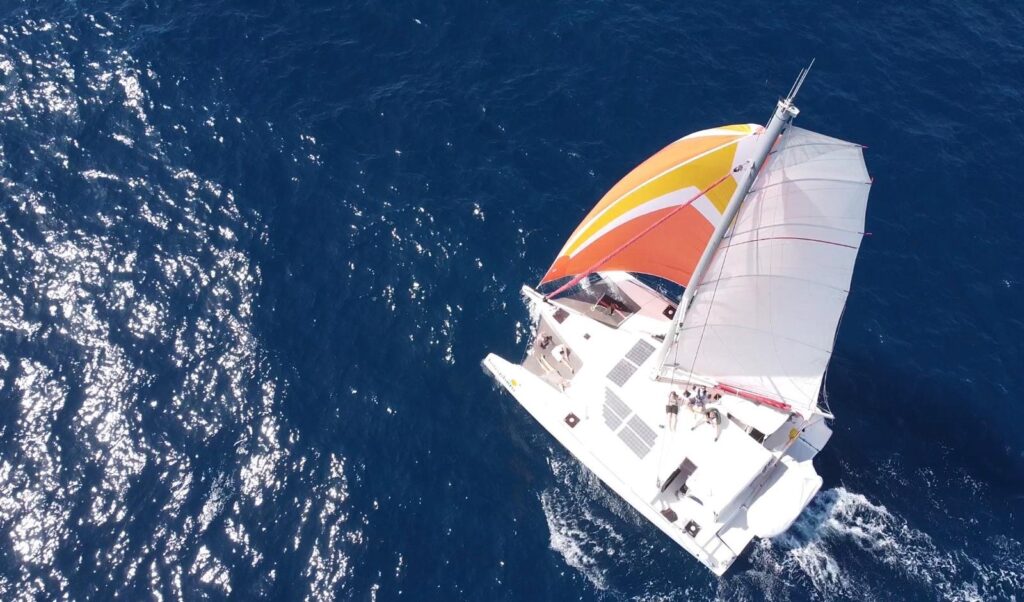

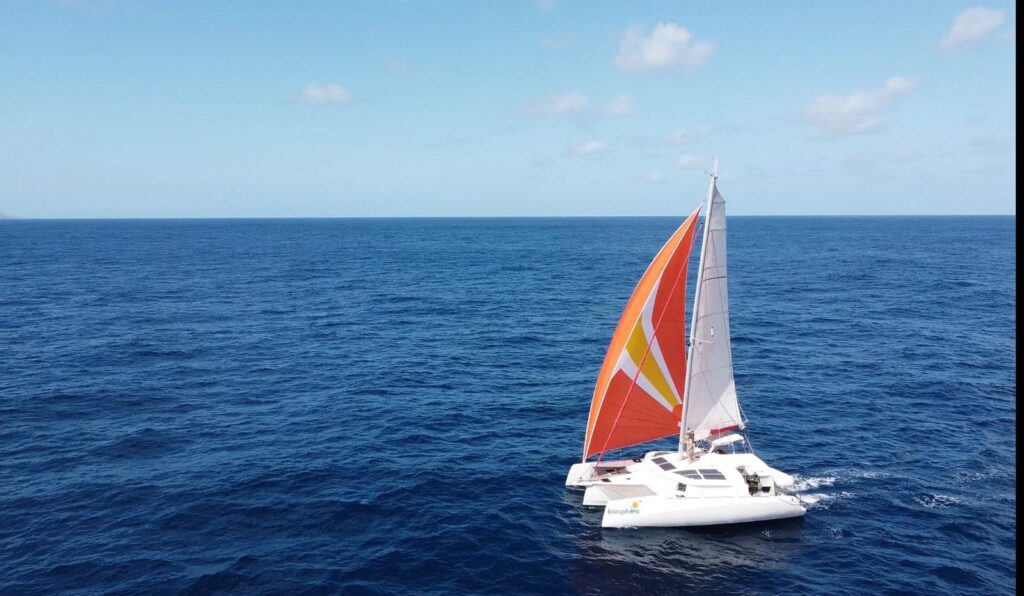
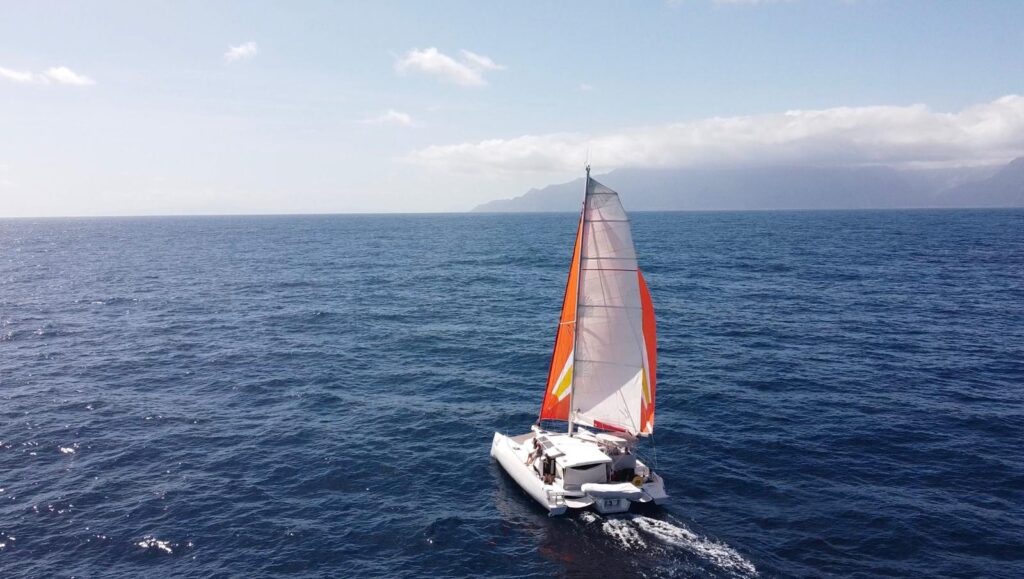

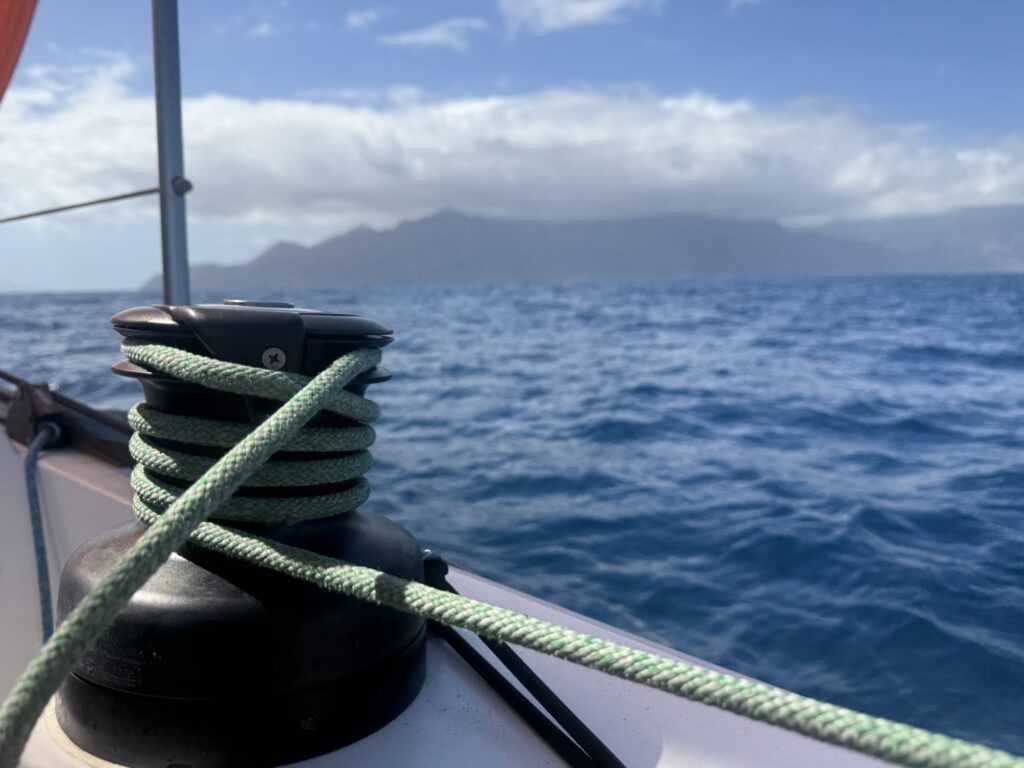
All that remained was the tiny question of how we were going to moor in Mindelo without an engine. The idea was to call the marina in front of the bay and ask for a boat to tow us in. Good thinking, but it didn't work. The marina didn't reply... . Then there was Lee, a very nice Englishman who we had contacted via Navily and who was anchored in the bay. He has a dinghy with a 20hp engine and wanted to help in an emergency. In the meantime, we prepared for the manoeuvre of mooring or anchoring under sail. We hoisted the Code-D, set the genoa and reduced the mainsail to the 2nd reef. This was our first manoeuvre training: tacking with as long a phase as possible in the wind, then the uphaul: you turn with the bow into the wind and open or reef the sails. This stops the boat and you can, for example, rescue someone or drop an anchor. Once everything went well, we headed into the bay of Mindelo. The manoeuvre is not difficult in itself, but we didn't know the bay and practically only had one attempt. We sailed into the bay with the 2nd reef and half genoa, Lee turned up with his dinghy and showed us the way. He also stopped another yacht that was looking for an anchorage and was threatening to sail right into our path. Then it actually happened quite quickly: we found a spot at the edge of the anchorage, shot into the wind quite close to another yacht, the sails dropped and Katja dropped anchor! Then it was calm. The wind slowly drove us backwards, the anchor chain tightened and... held! The catamaran behind us seemed to come relatively close, but everything remained in the green zone. We were so relieved and congratulated each other on the great team performance! Bravo, crew! It had worked out really well, everyone had stayed super focussed and calm at the same time. We had every right to be proud of ourselves!
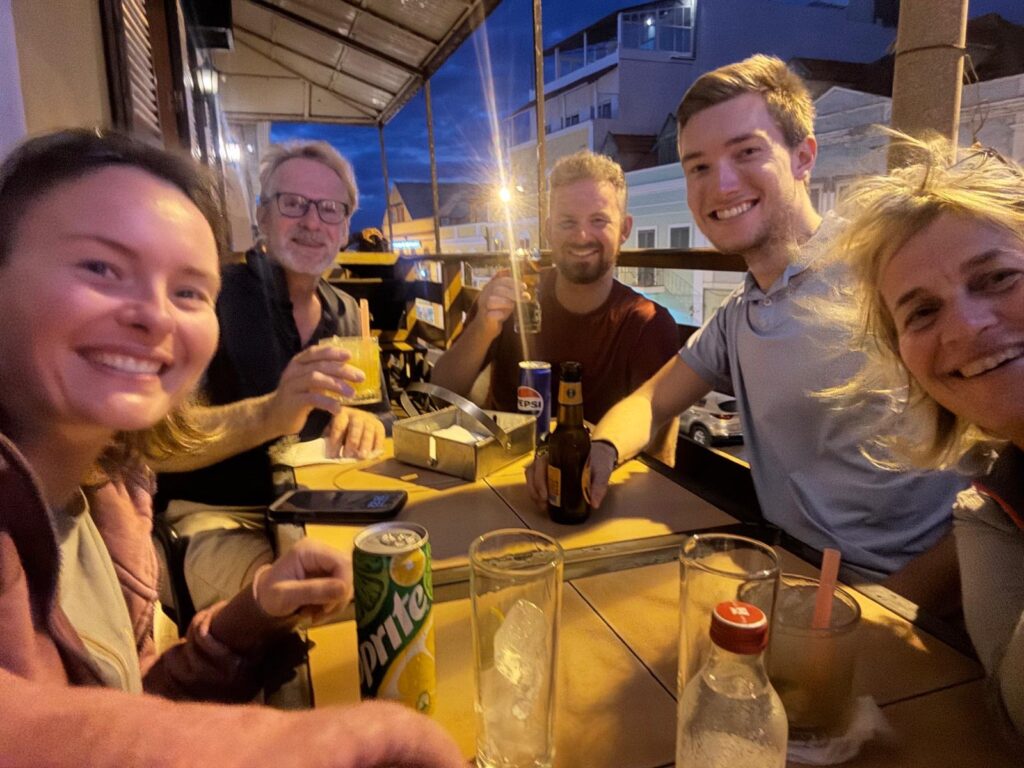
We slowly relaxed, celebrated our arrival in a quiet bay and made our first trip ashore. We were no longer able to clear in, but that doesn't seem to be seen too strictly in Cape Verde. We marvelled at how different the country was from the place we had started from. We enjoyed a delicious pizza and fell into bed early like rocks.
Yesterday it was also clarified that we would probably get a new propeller here. Not the fancy 3-blade folding propeller that folds away when sailing under sail, but a simple rigid 2-blade propeller. But that only costs €400 and not €3,400. And a 2-blade and rigid on the boat is better than a 3-blade and foldable on the seabed. A replacement propeller will probably be added to the spare parts list in the future... .
Congratulations on your "super crew!"
An exciting report, dear Martin. I can only marvel at how you successfully mastered the highs and lows.
For now, we wish you a good, stress-free recovery.
All the love from mum and dad
Dear Katja, dear Martin
wish you and the crew a happy St Nicholas Day.
May the favourable winds be with you.
Great respect and greetings from Berlin from Martina and me