
Cabo Verde - No stress!
That is the motto of the island nation and we are trying to internalise it more and more. After the excitement of arriving a month ago, we were happy to have got a propeller quickly so that we were ready to sail again. The other repairs concerned the water ingress in the rudder compartment and that was much more difficult and time-consuming. In the end, we spent 11 days in the marina so that the work could be carried out, which tested us in the island motto: The no-stress way of working naturally also means that things drag on and cannot be planned. The German heart, which tends to be polarised towards stress, ticks faster when you are moored in the harbour, pay expensive mooring fees and then no one turns up at the agreed time. But I know the same thing from France and Croatia, so: No stress - everything will be fine!
But let's take things one step at a time and first of all, sorry for not getting in touch for a month. Somehow there was always a lot going on and we didn't have the peace and quiet it takes to write an article. But we have experienced a lot that is worth reporting.
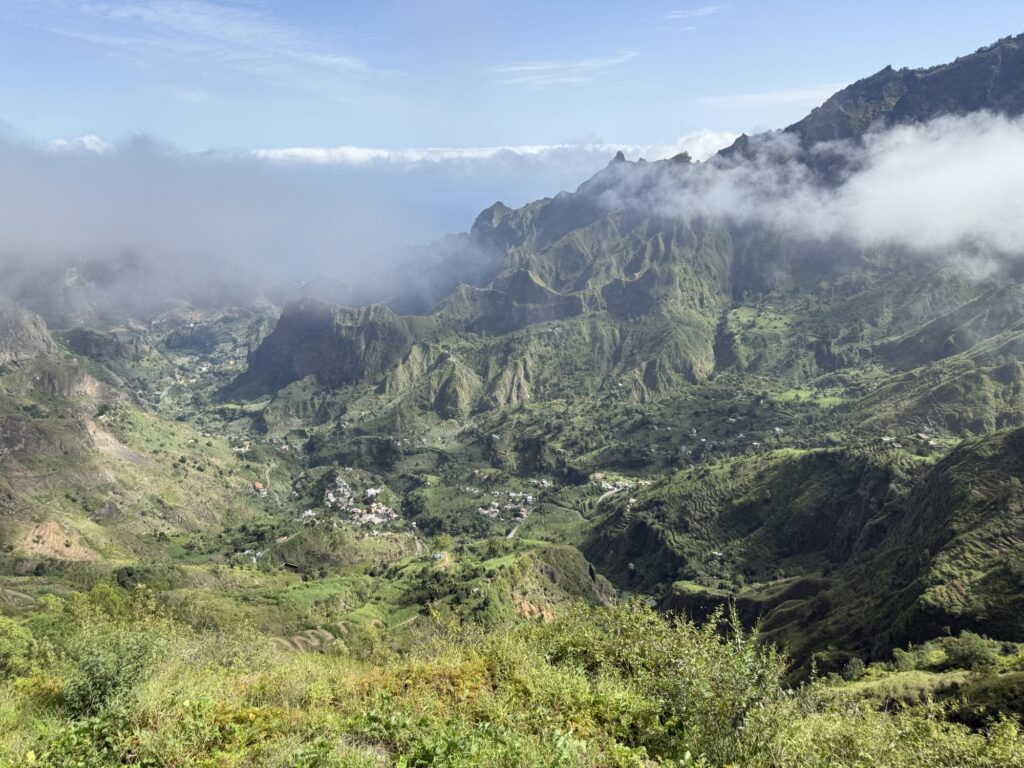
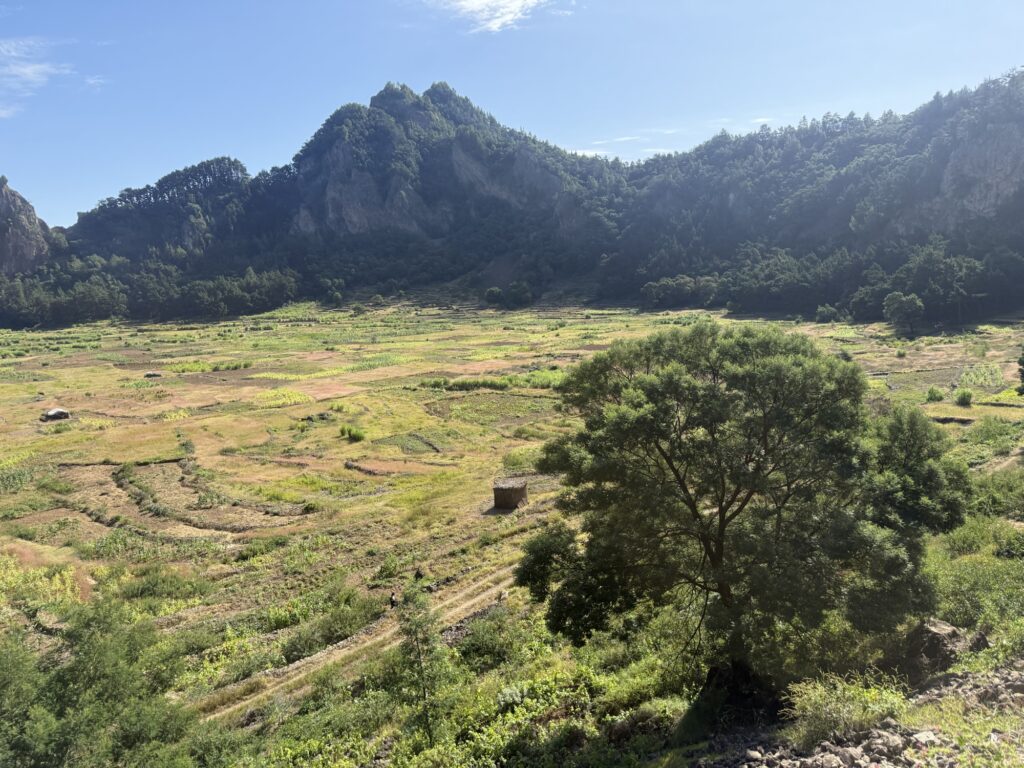
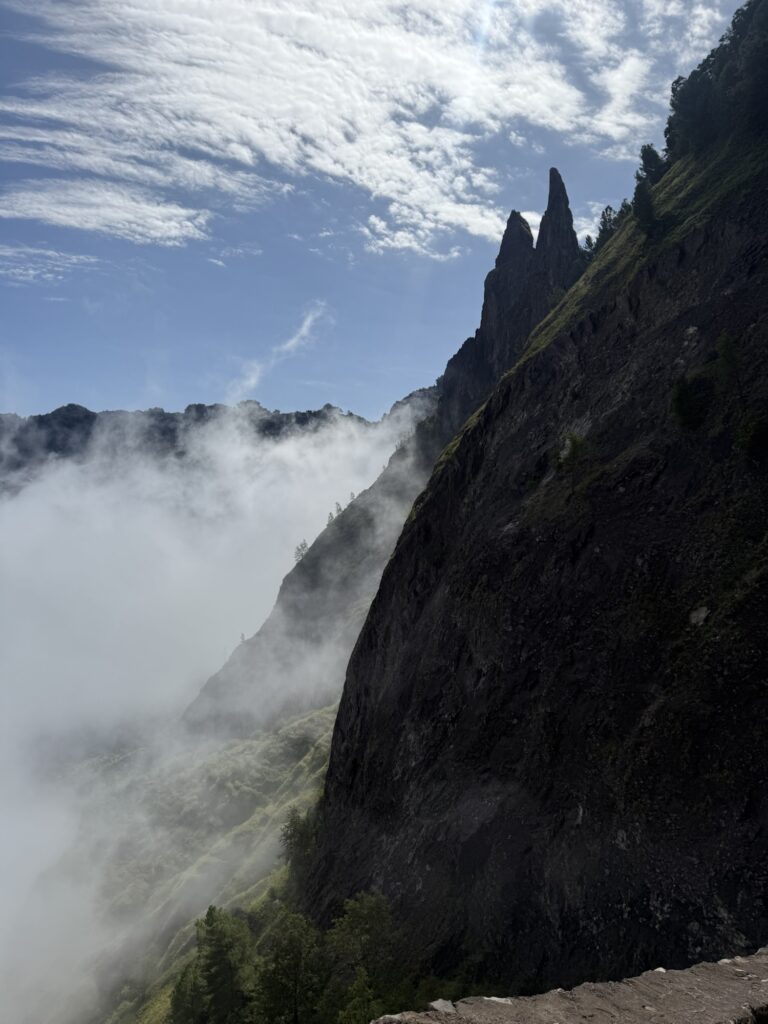
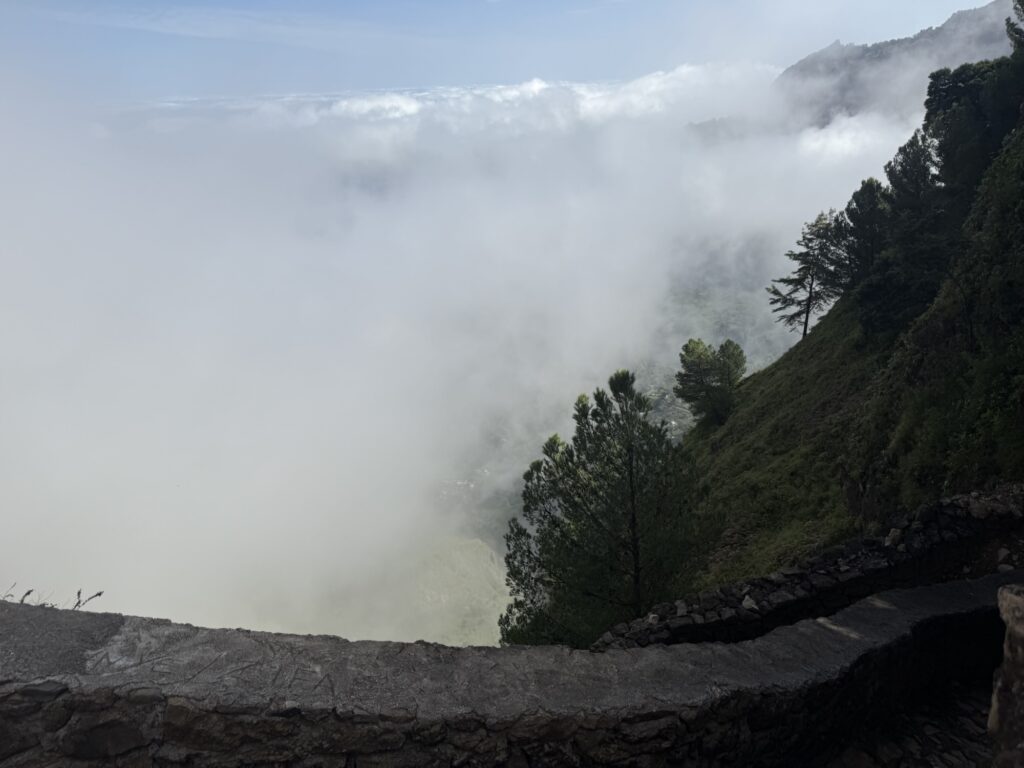
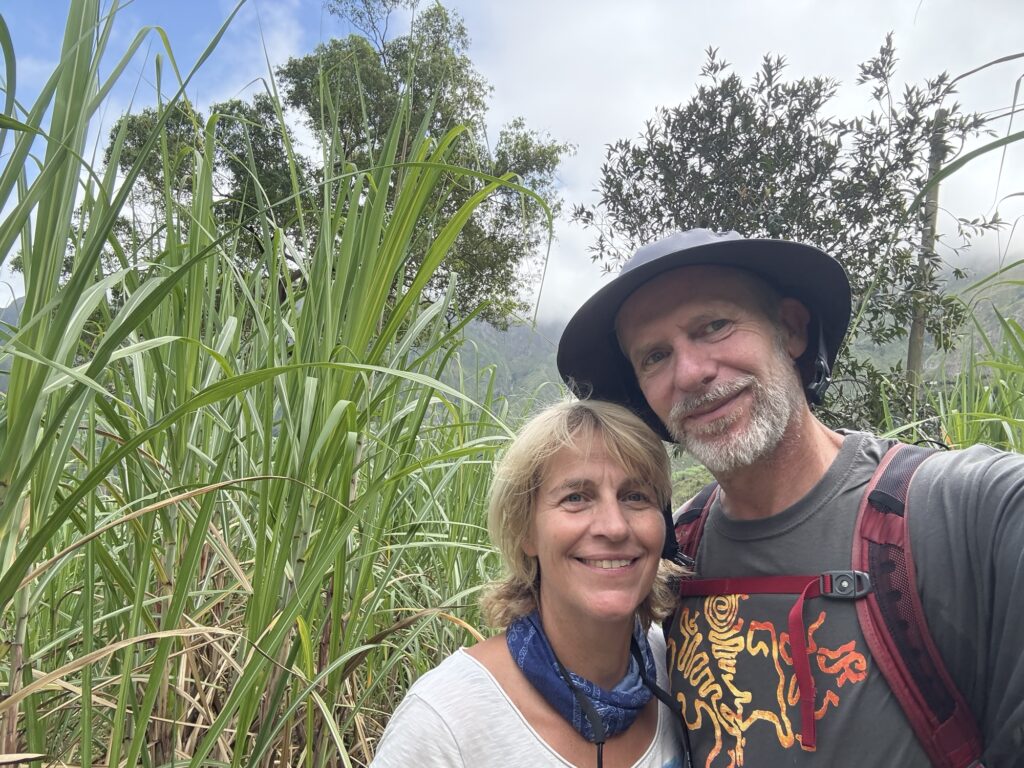
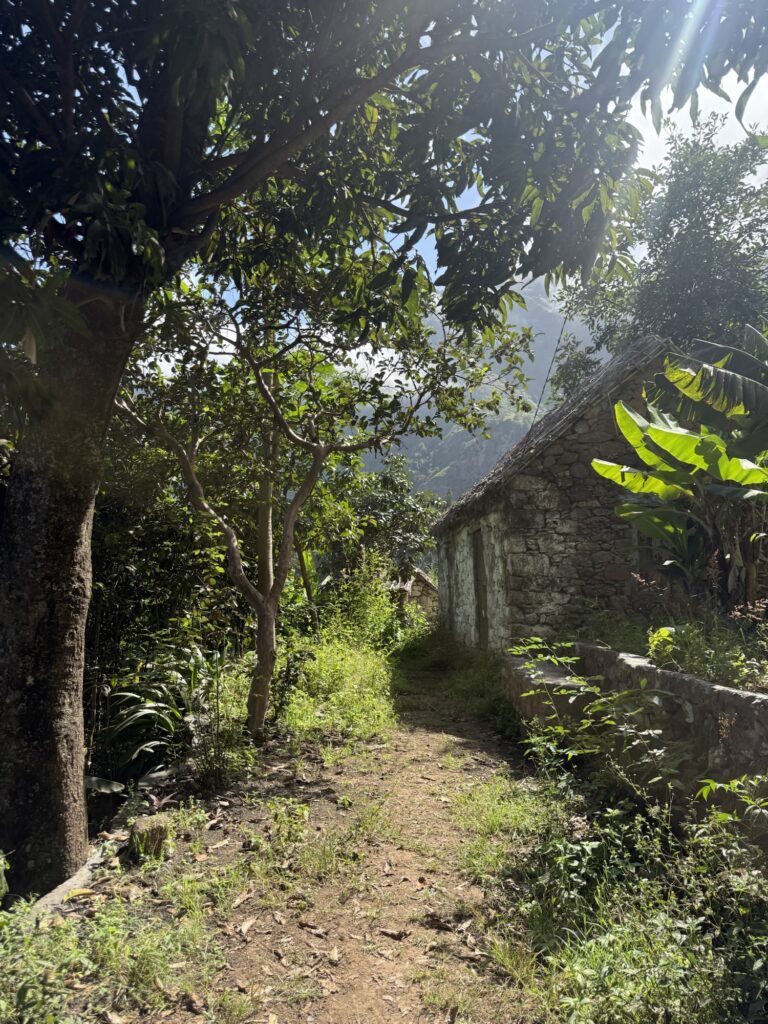
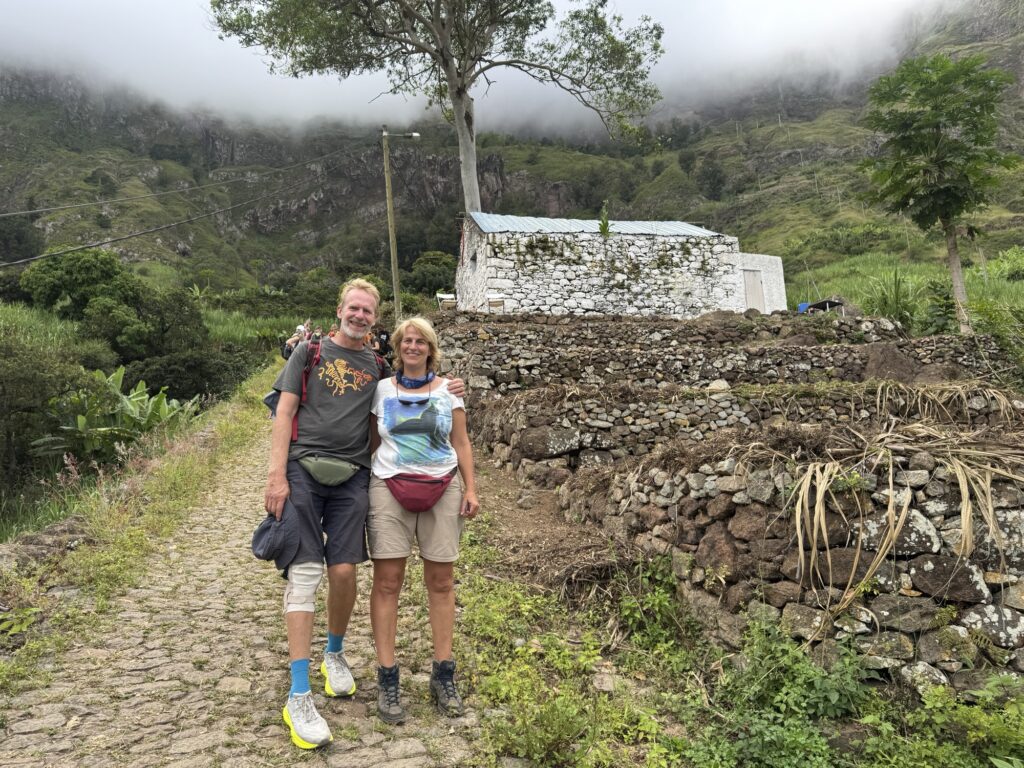
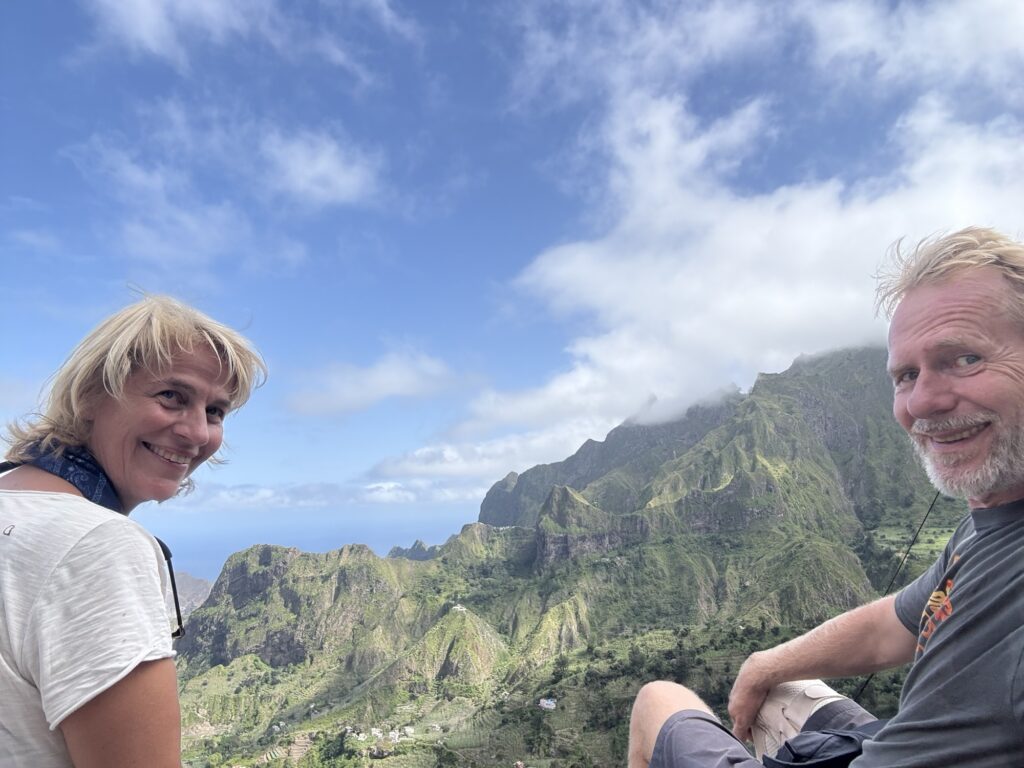
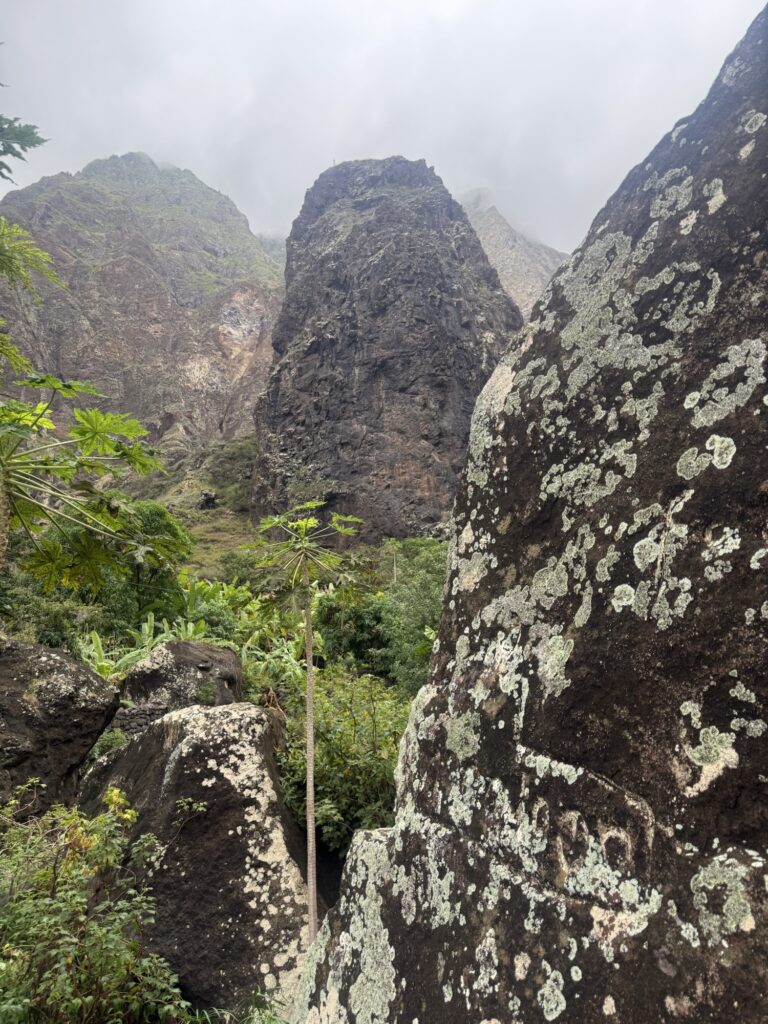
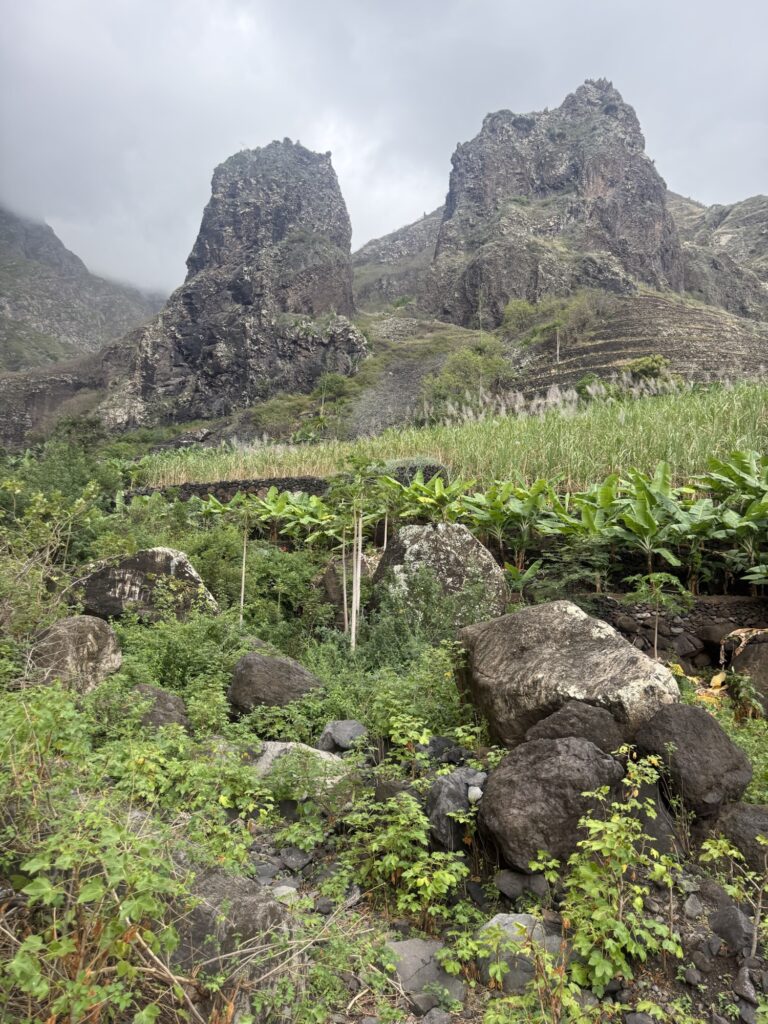
We spent 4 days in Santo Antao, the neighbouring island of Sao Vincente with the capital Mindelo. Our fellow sailors Jannik and Tanja looked after the boat and we travelled by ferry - a holiday from the boat. Sleeping on land for 3 days in a row! It was great, Santo Antao is a great island. The high volcanic crater blocks the clouds that rain down on the north side. So there is plenty of water and immediately everything sprouts and flourishes in lush green. Sugar cane, bananas, coffee, mangoes, avocados, eucalyptus etc. etc. . We took the collectivo, a shared taxi that leaves when it is full, to the edge of the volcanic crater and then hiked first along the crater and then down through a valley. First in the clouds, then warmer and greener with every step. At the first foothills of a village, two chairs with a perfect view grinned at us. In front of them was a small basket with bananas and a coffee pot and although we had just rested, I was magically drawn to this ensemble. We had stopped at a coffee plantation and Katja had just joked about what these coffee plants were trying to tell me, as I drink so much coffee. Well, the answer seemed to be Dennis. Dennis came shuffling round the corner as we approached the chairs looking for the host of the coffee pot. He was pleased that we appreciated this place, which he found as magical as we did. He had spent his childhood here with his beloved grandfather before living in New York for 30 years. Now his grandfather had bequeathed him this piece of paradise and he had given up his American life to farm here! He has only been there for 3 months and is still in the early stages, but the enthusiasm and spirit were palpable. He started by gradually removing and replacing the sugar cane that was grown as a monoculture on the land. This caused him a lot of trouble with the neighbours, who considered the production of grog distilled from sugar cane to be the only lucrative source of income. Even more so, as his grandfather had last leased the land and the tenants had run a grog distillery on the magical place with the two coffee chairs.


Our last island in the Canary Islands was La Palma, where we visited a farm run according to permaculture principles. The farm is called Autarca - Matricultura and has been run by the Swiss couple Barbara and Erich Graf for 18 years. I was totally impressed. I arrived at the place with a slightly grumpy face, as something on the boat wasn't going the way I wanted it to and left with a big smile on my face. Even the atmosphere when we arrived irritated me: we arrived in our hire car and were too late. As we parked, a man appeared above the wall where we wanted to stand. I was expecting a somewhat disparaging look, firstly because we were late, secondly because we were in a car that was harmful to the environment and thirdly because we wanted to park in this place. But the man was simply friendly, open, relaxed and everything was fine! Nothing reproachful, just open and welcoming. And so it went on: his wife Barbara had already started the tour, greeted us without reproach and we learnt that permaculture thinks in cycles, so that in the best case scenario everything comes into being by itself in the end. We learnt about the sun oven, in which you can only cook with sunlight, and the drying oven, which you can use to dry and preserve all kinds of fruit. All relatively simple but effective constructions. We learnt how they had taken over the land with a monoculture of avocado and citrus, both in a state that was deemed irreversible by 'experts'. A Japanese permaculture book recommended planting a particular acacia tree to protect citrus trees. They followed the advice and after a few years, not only did the citrus and avocado trees thrive again, but a beneficial insect was found in the acacias that was thought to be extinct on the Canary Islands. It is assumed that it was blown over from Morocco and found a nurturing host in the acacia. The stories were exciting and exotic and the sceptic and critic in me might have become active if the two had not presented their story in such an undoctrinaire and relaxed manner. They had no scientific explanation as to why acacia helps, but it is said to have worked once before, so they tried it out. And it worked. Permaculture seems to be based a lot on observing and adopting. The tour continues to show us technical achievements, such as the compost toilet, which provides fertiliser, the worm composter in a bathtub, which composts pretty much everything and processes it into fertiliser. Then there's the biogas plant, which produces gas for cooking from lemon peel and other organic waste. Basically a plant consisting of two large plastic buckets and a few rubber hoses. In the second part, we saw what flora had developed. We tasted strawberry guavas, which I had never heard of before, and learnt how a bed is built up in layers, how simple trenches ensure that water does not flow down the mountain and take the precious soil with it, but stays where something wants to grow.
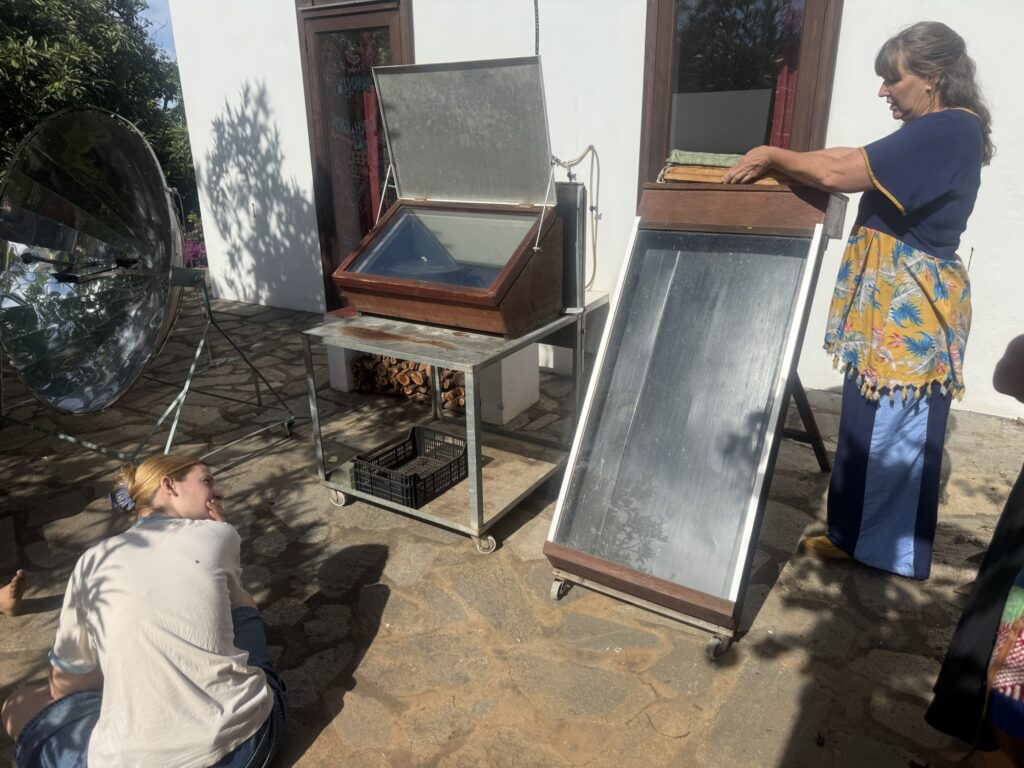

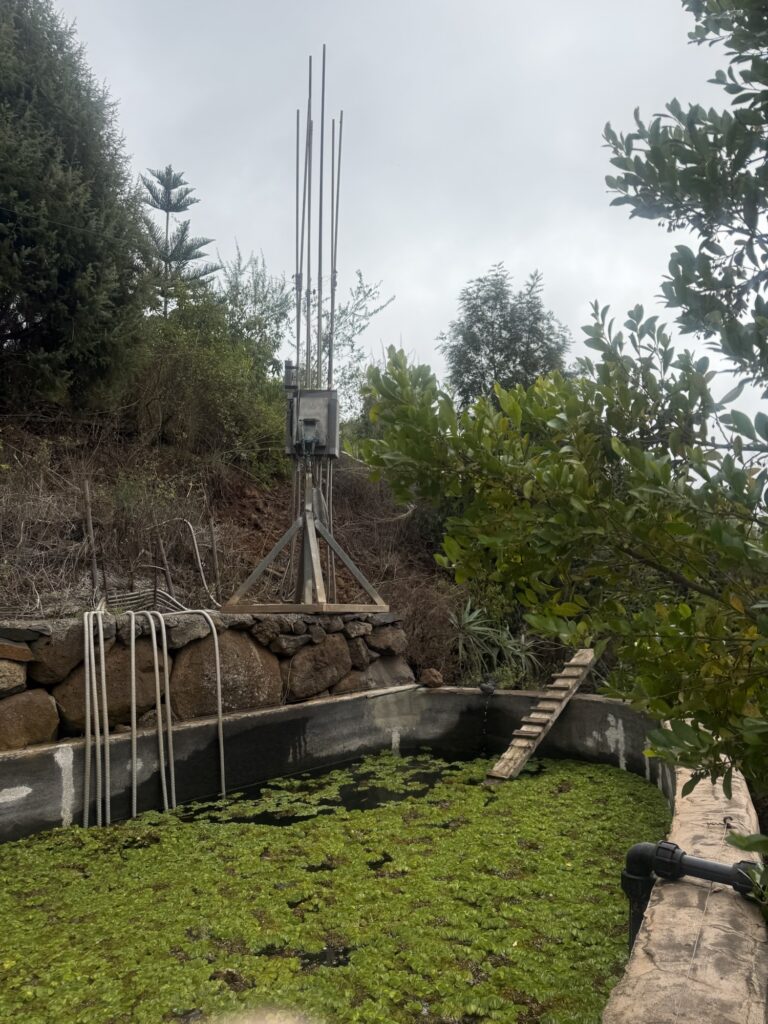
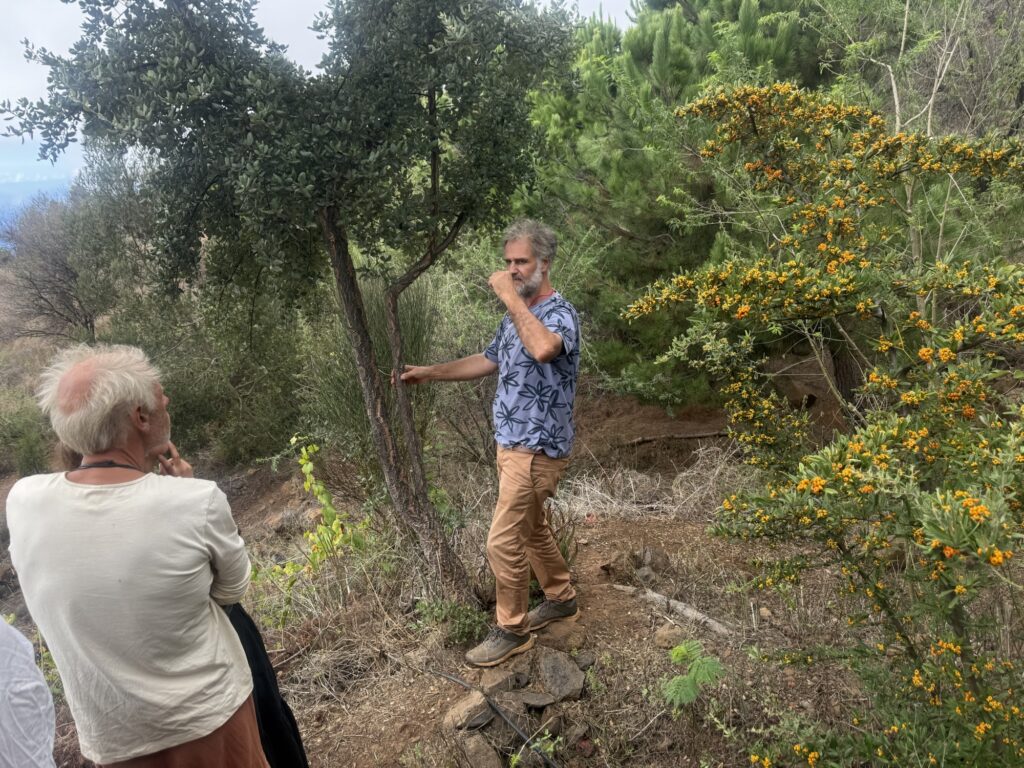
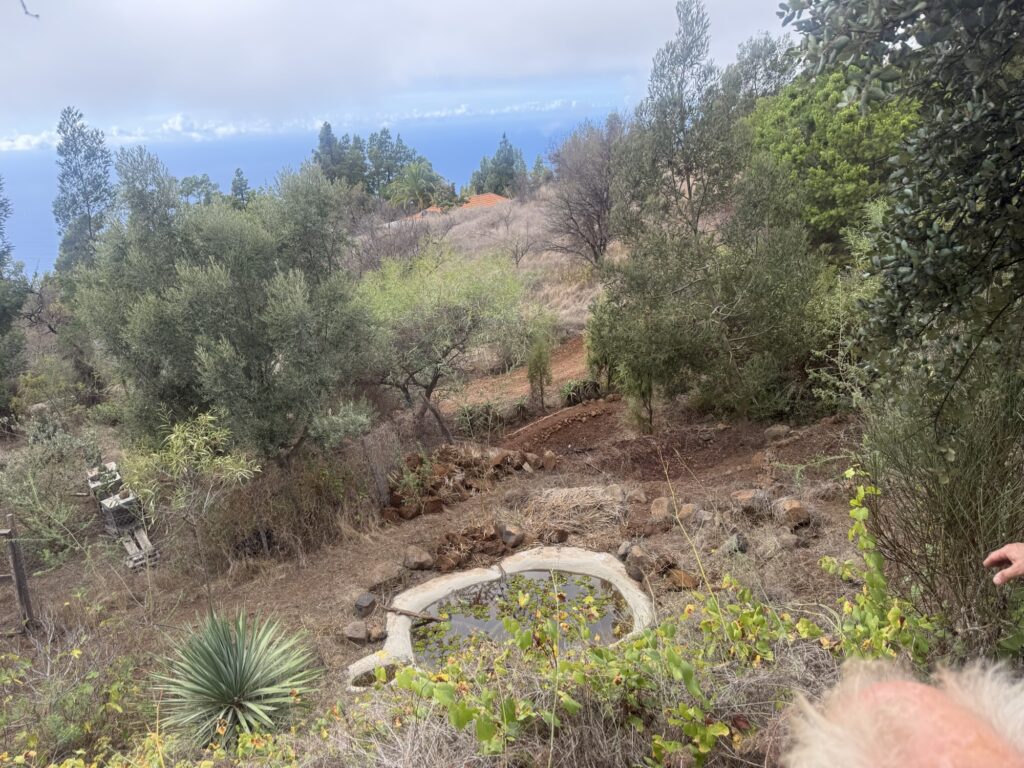
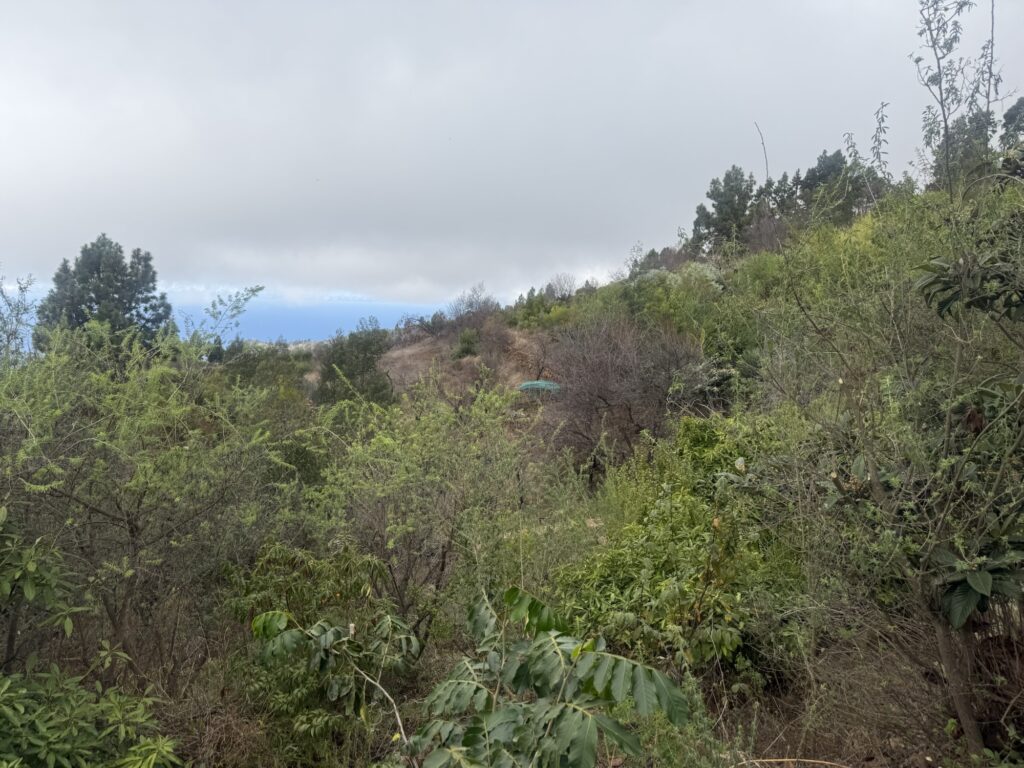
We were so enthusiastic and impressed that we would certainly have booked the two-week permaculture training course if there hadn't been another route and 3 fellow sailors waiting for us.
In any case, we had this story in mind when we got talking to Dennis on Santo Antao. He had also heard and read about permaculture and was now trying to apply some of the principles himself. I felt a bit like an old-time sailor or a trader who learns about things in one place and carries them on to another. Accordingly, I am now trying to give Dennis an insight into what Barbara and Erich have created in La Palma. The two of them have documented everything well and are happy to share, the idea being that the principles spread and in the end everything is mutually beneficial.
What also impressed me about Barbara and Erich was their general lifestyle. Both are about the same age as us, Barbara was an architect and both left their well-paid lives in Switzerland behind to dig their hands deep into the earth in La Palma. And they seemed so happy and at peace with themselves. They have obviously found the meaning of their lives and realised it in a great way. Dennis has now left his life in New York behind him and is digging in the earth in Santo Antao. He also seems very convinced and enthusiastic about his path.
No, I'm not planning to buy a piece of land tomorrow and become a farmer too. I have no idea and I feel too old to put in the effort that such a project entails. What impresses me is the consistency with which the three of them go about it. I think I've been searching for decades to find out what my path actually is and how I can conjure up such a happy expression on my face. Perhaps searching for and looking at such paths in life is part of my journey and that's why we are travelling the world with the Biosphera, to get to know something like this. And to take some of it with us - from La Palma to Santo Antao and perhaps a spark of it with us to you.
We also met my aunt Sylvia Hess in La Palma. I call her my aunt because she is probably a generation before me, but neither of us found out exactly how we are related. Sylvia is a painter and lives half in Germany and half on La Palma. Also an exciting path. She is married to Harald, who lives almost exclusively on La Palma and has been researching the Canary Islands for 40 years, especially the indigenous people, the Guanches. We met for dinner and Harald told us about his research, which was once again impressive. The Guanches probably originated from various tribes, mainly European and North African, who had settled on the individual islands. Probably with reed boats that could transport considerable loads. The theory that the Guanches had no boats and no contact between the islands is therefore quite unlikely. It is also interesting to note that the Palmeros, for example, have Guanche roots for the most part. 80% of the population are descended from the Guanches rather than the Spanish. Today's rich banana barons are often Guanches who generated their wealth from the water rights that the Spanish granted to co-operative Guanches after the conquest of the island, although they certainly didn't think less of their own Spanish relatives.

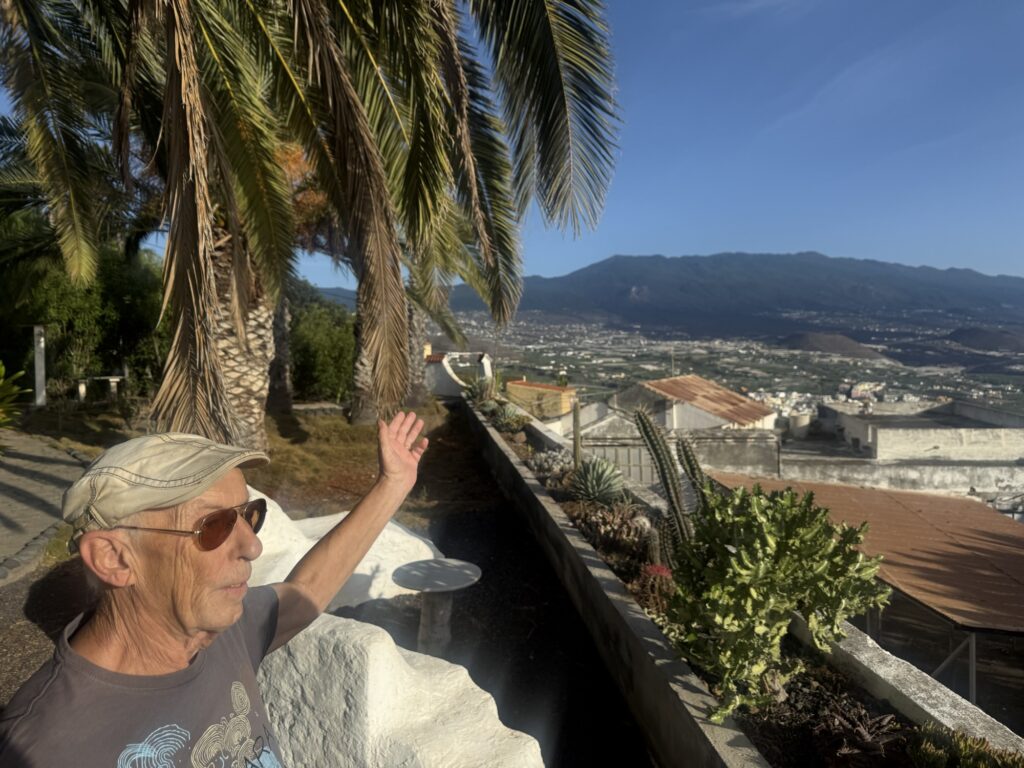
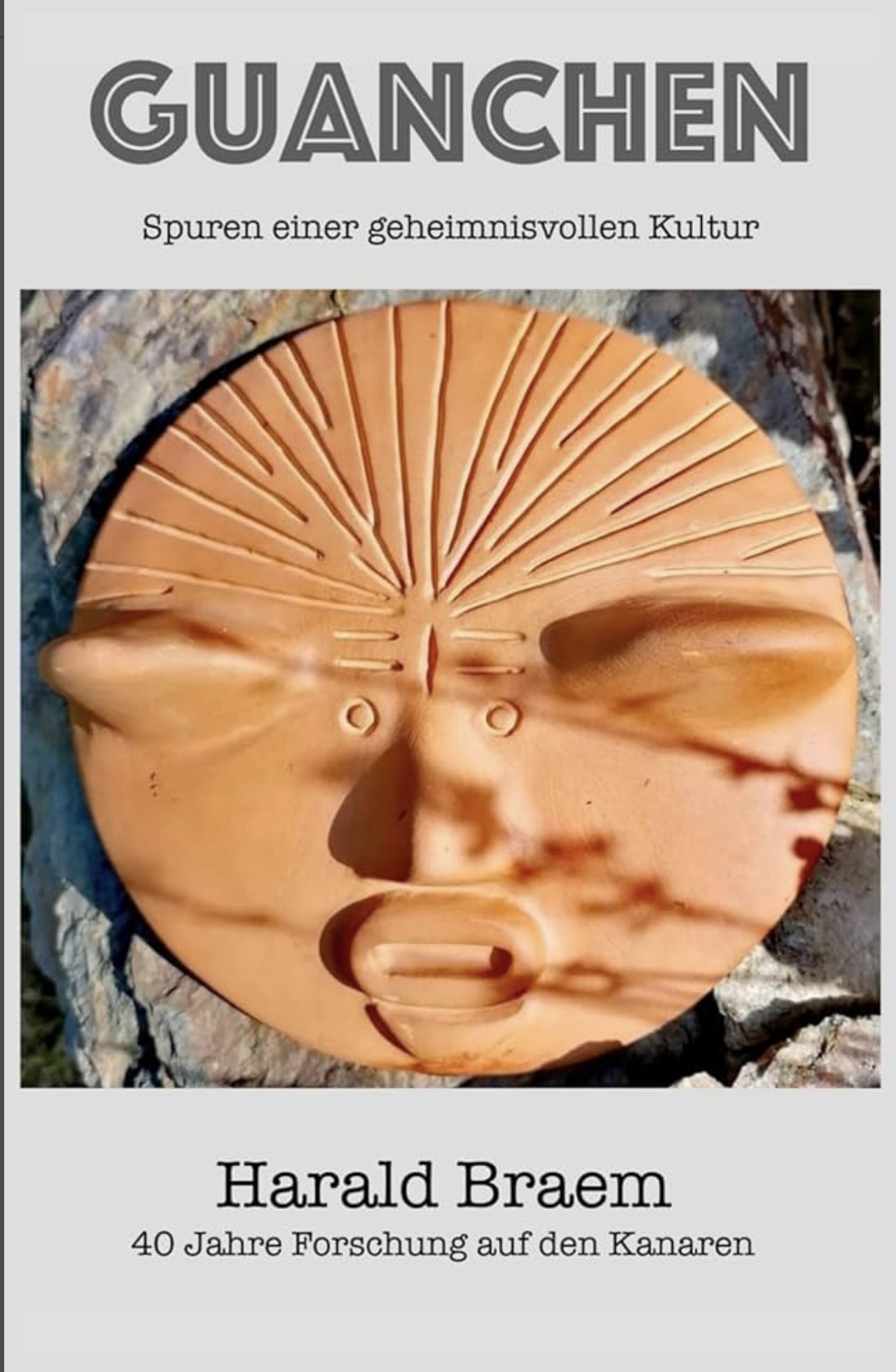

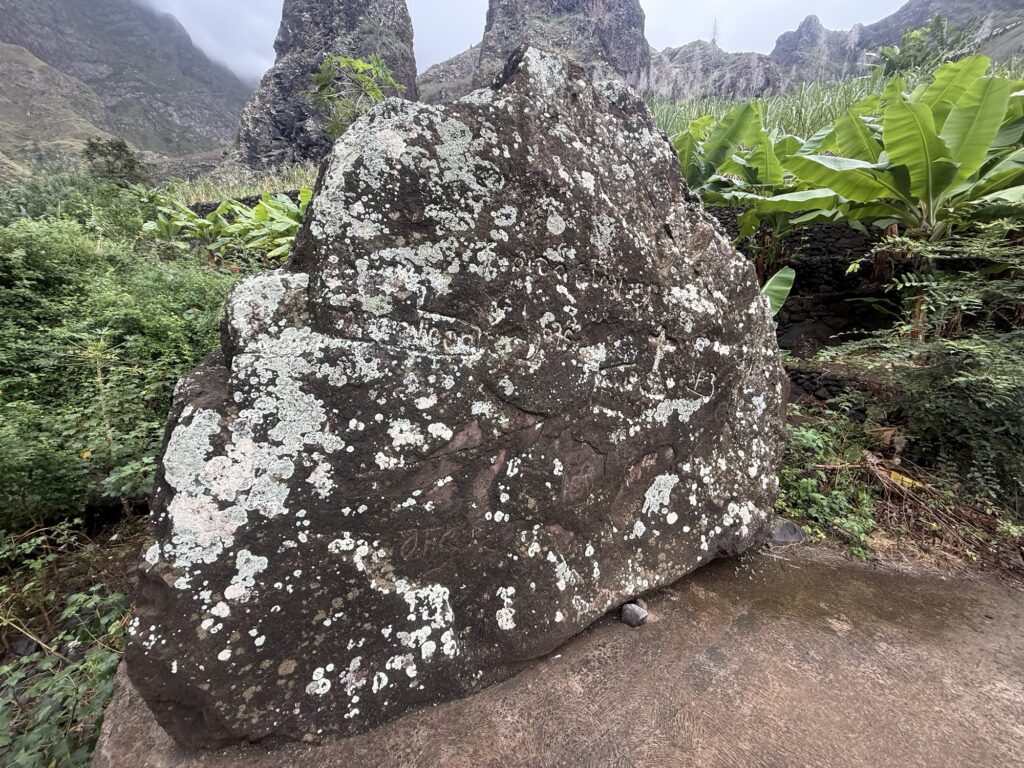
So I was full of stories about indigenous people before the Spanish colonisation when we arrived in Cape Verde. Accordingly, I was very perplexed when I was told that no people had lived on the islands before they were discovered by the Portuguese. Why wouldn't people have found their way there? The current and wind are favourable from the Canary Islands, which we tested ourselves. The islands are barely 480 kilometres from the Senegalese coast. And then nobody is supposed to have been there, not even mammals? I was accordingly curious when I read that there are supposed to be stones with old inscriptions from times before the Portuguese colonisation. So we went looking for this stone in Sao Antao, which we finally found surrounded by a concrete base on the edge of a small settlement. The inscriptions were scratched into the stone and we would never have noticed them if they hadn't been repainted with white paint. I sent photos of them to Harald in La Palma, but he thought it was unlikely that they dated back to before the Portuguese colonisation. Which is probably also the opinion of other scientists. Above all, I realised what a tedious discipline archaeology is and how dependent it is on chance. Harald describes this very well in his latest book. However, the prerequisite is that someone has the time, the leisure and the intuition to discover anything at all. When I look from the stone into the valley, where there are still hundreds of thousands of such stones, not to mention the other valleys and mountains, the search for such traces seems to me to be a grotesque endeavour. History was written here by the Portuguese and even if there were inhabitants before them, the Portuguese interest in writing about them was probably rather limited. But it is also quite clear that there was no population comparable to that of the Canary Islands and that the Portuguese took the islands without fighting. You just can't transfer everything :-).
Instead of mixing with indigenous people, the Cape Verdeans mixed with the new inhabitants. It is well known that many African people were brought to Cape Verde as slaves. I can't say exactly what role Cape Verde played in the North Atlantic slave trade. In any case, it is close to sub-Saharan Africa and people from both Europe and Africa played an important role in the slave trade. In Cape Verde, I notice that the entire population seems to have African and European roots. The black-white conflict is not as present, at least on the northern islands, as I have experienced in Caribbean countries or in Africa. Overall, the atmosphere does not seem to be characterised by anger and hatred, the people we meet are friendly, approachable and fairly relaxed - Capo Verde - No Stress! .
Dear Martin, dear Katja,
Thank you Martin for your detailed and exciting report. It's unbelievable how this journey brings you to unique paths, people, places, ways of life and attitudes! Thank you for sharing this with us! Even reading it is simply inspiring for your own being and soul!
Oh and at the same time you are so far away for me, like on another "star", and I miss you ; ) So I read and you are always very much in my thoughts. I would love to be sitting on the boat with you right now, talking about life, searching, wanting, finding, love, nature, the muse ..... That is a beautiful thought!
Meanwhile, we celebrated Christmas. Alma and Bruno were there with "appendix" - for the first time - and Nelly with Marie. It was a lovely get-together ... beautiful, relaxed and cosy! We have my father's cot in the large kitchen, which I love so much because it brings back so many memories of him, and a small decorated Christmas tree. The kitchen has been transformed into a cosy place! While Christoph has to go to the KO again and again, I dedicate myself to the "Raunächte", a ritual for 12 days until 5 January. This time is especially for inner reflection, to let go of the old and make room for the new. Cards are used to guide you in the form of inspiration, power, ritual and meditation cards. This is a ritual that I am now doing for the second time and I realise that it gives me space to pause ; )
Yesterday we were slaughtering in the cold, blue sky and sunshine ; ) and thought of you! Life couldn't be more different at the moment, could it ; )
It is all the nicer to hear from you again and again. Feel embraced and hugged from the bottom of our hearts and stay well in your strength and openness. Your Susanne and Christoph
other realms ...
Dear Susanne, thank you so much for your lovely words! We too would have loved to have you here with us, Cape Verde is a great place. At the same time, we also think about cosy evenings in cold climes from time to time, warm, cosy in front of the fireplace with Christmas time and a nativity scene. We also had a Rauhnächte ritual last year, where you write down 13 wishes and burn 12 of them. You have to fulfil the 13th one yourself. I remember that "Fair and low-conflict boat purchase and equipment" was on the 13th card. I often thought about that and made an effort. Now the next round is coming up for us soon, i.e. the trip across the Atlantic. I'm looking forward to it and we'll have you in our hearts!