
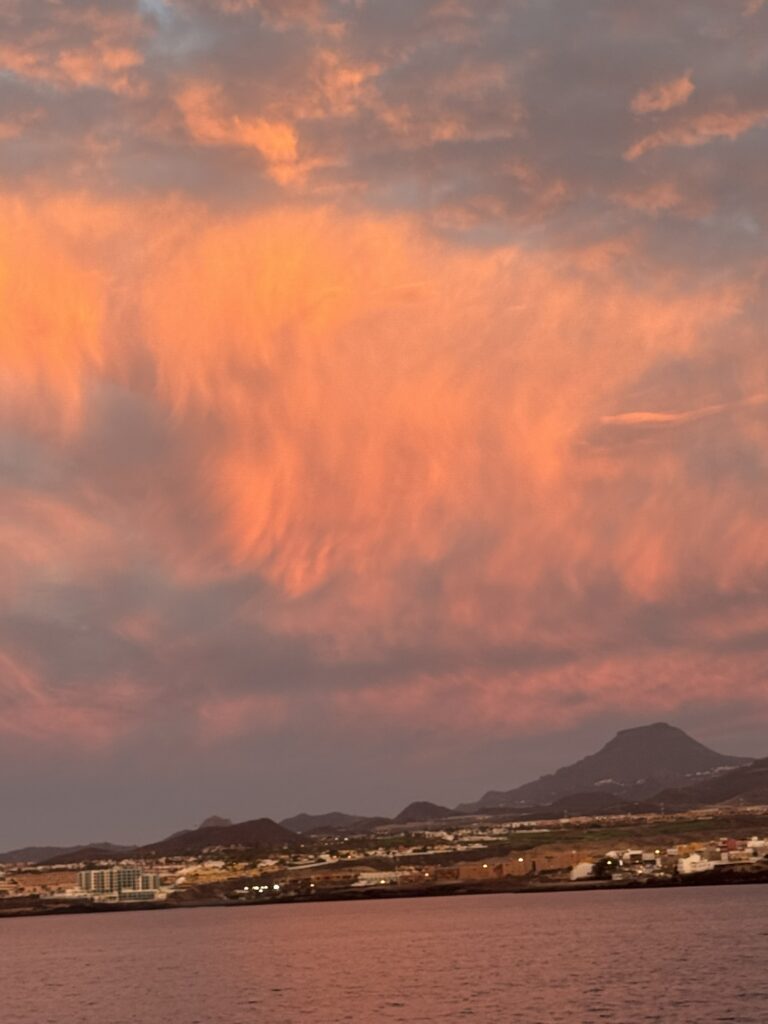
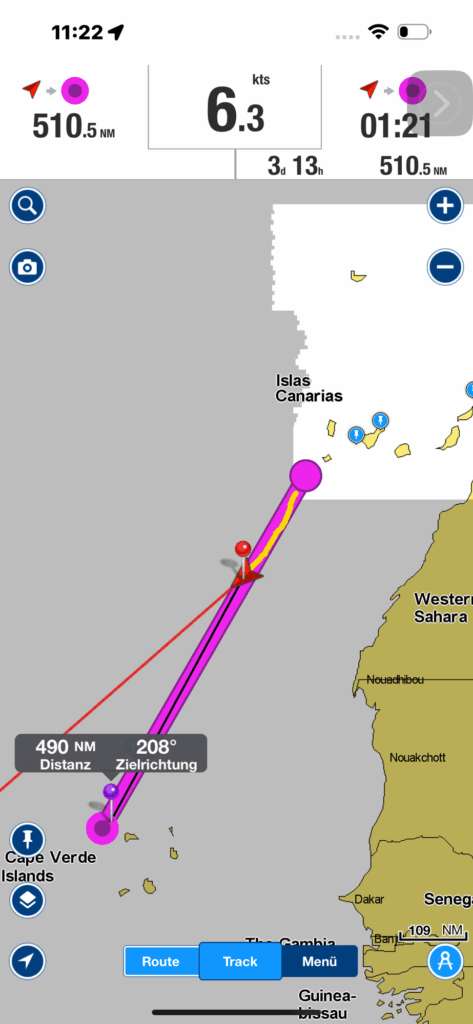
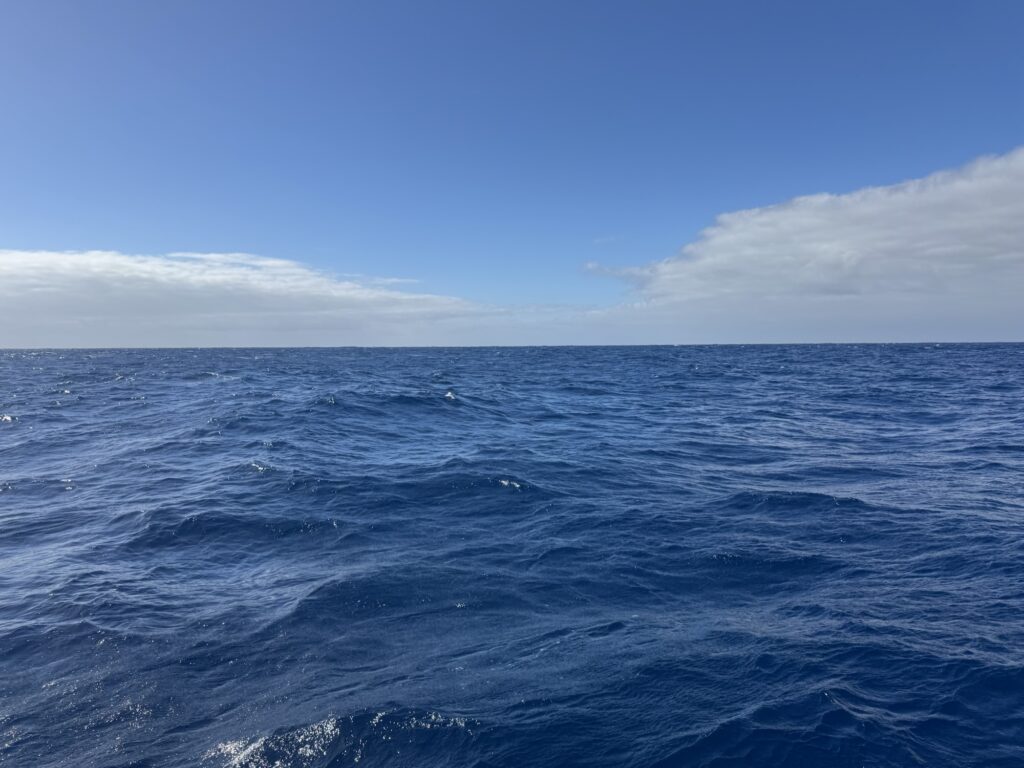
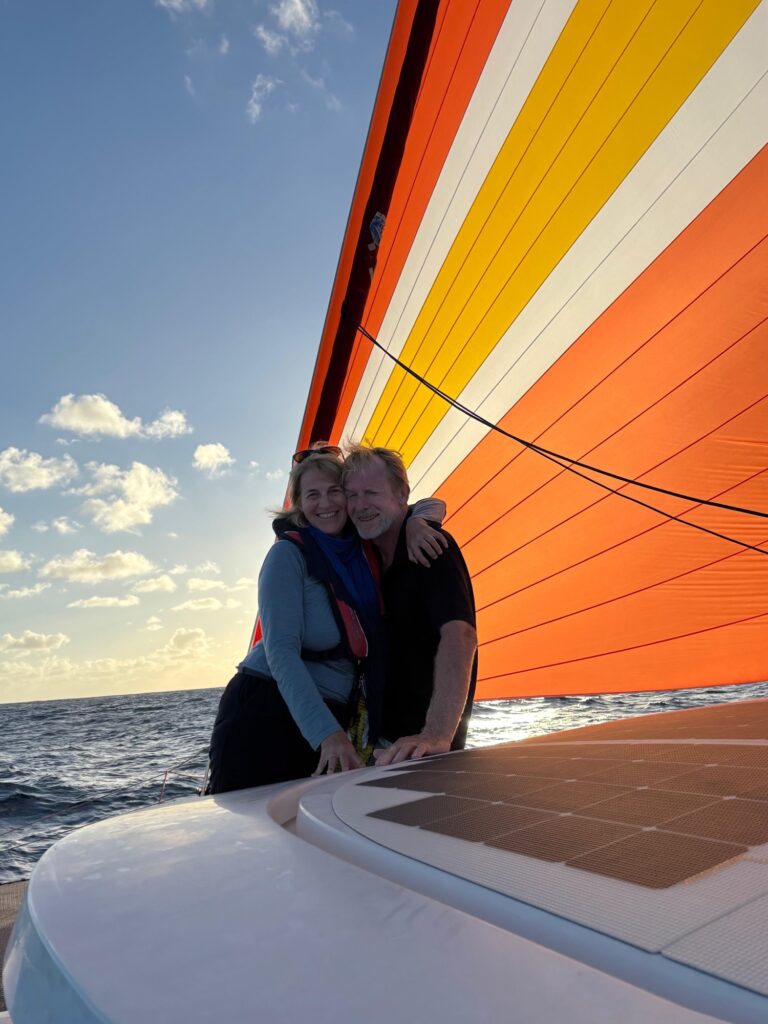
I'm 24 degrees 22.70 minutes N and 20 degrees 33.24 minutes W, in the middle of the ocean on the way from La Palma to Cape Verde. We still have 510.5 nautical miles to go. During my early shift at 8.00 a.m. we spotted about 40 dolphins coming towards us on our starboard side and jumping out of the waves almost simultaneously, large and small dolphins. Yesterday morning there were about 4 playing off our bow. There have been five of us travelling for two days and two nights. My system finally seems to be relaxing in harmony with the sea.
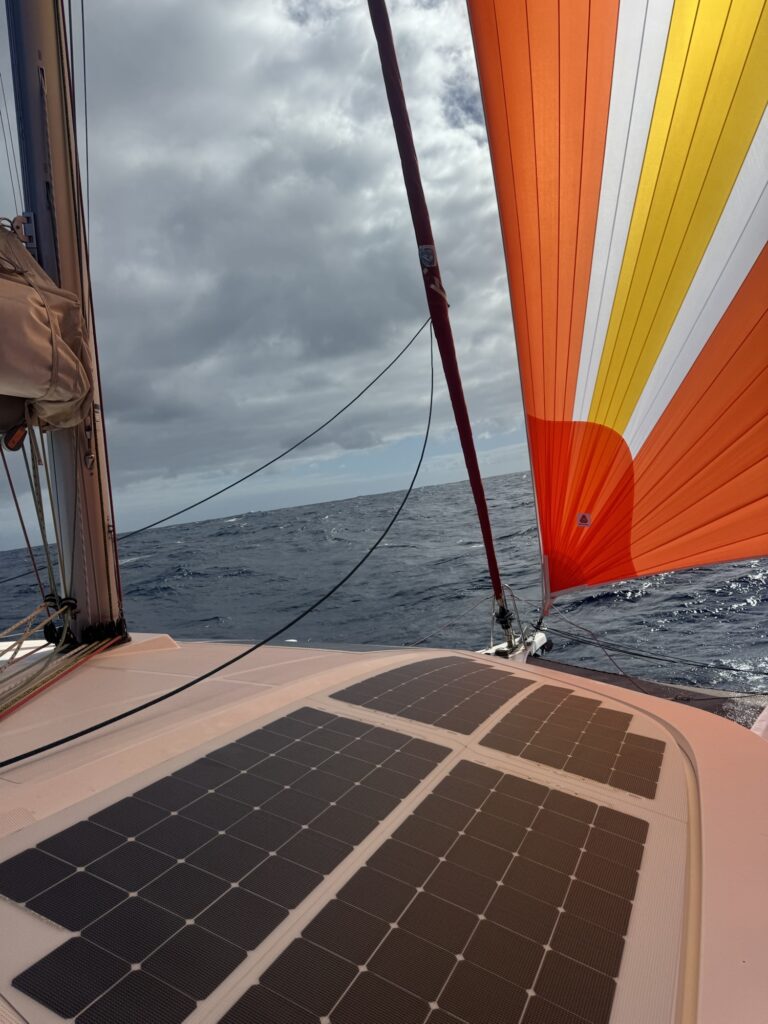
The last few weeks have been very different. I found myself questioning the whole mission, instead of coming to myself and diving deep into the human-nature relationships that I want to explore more deeply, our biosphera was constantly demanding its attention. It pushes itself into the foreground on a daily basis, eating up my thinking capacity and my wallet. Until Morocco, my challenge was to sail the Biosphera and grow in my nautical skills. In the last few weeks, however, it challenged my engineering skills. Something was constantly breaking down or the things that still had to be done for the long crossing often turned out to be much more time-consuming than previously assumed.
I will report on my experiences and reflections in Morocco elsewhere and hopefully there will also be a podcast about it. Morocco was a different world and also shook up my thinking about UNESCO biosphere reserves. These experiences need to be put down on paper, because the wonderful people I met should not be forgotten. On the contrary, good relations with my university in Eberswalde could develop here, there are many topics that could be worked on. Although we are travelling slowly, the start to the Canary Islands seems too fast to me. However, staying in Morocco was not an option, which is perhaps a good thing, because it is often only when we look back that we recognise connections and contexts that are exciting.
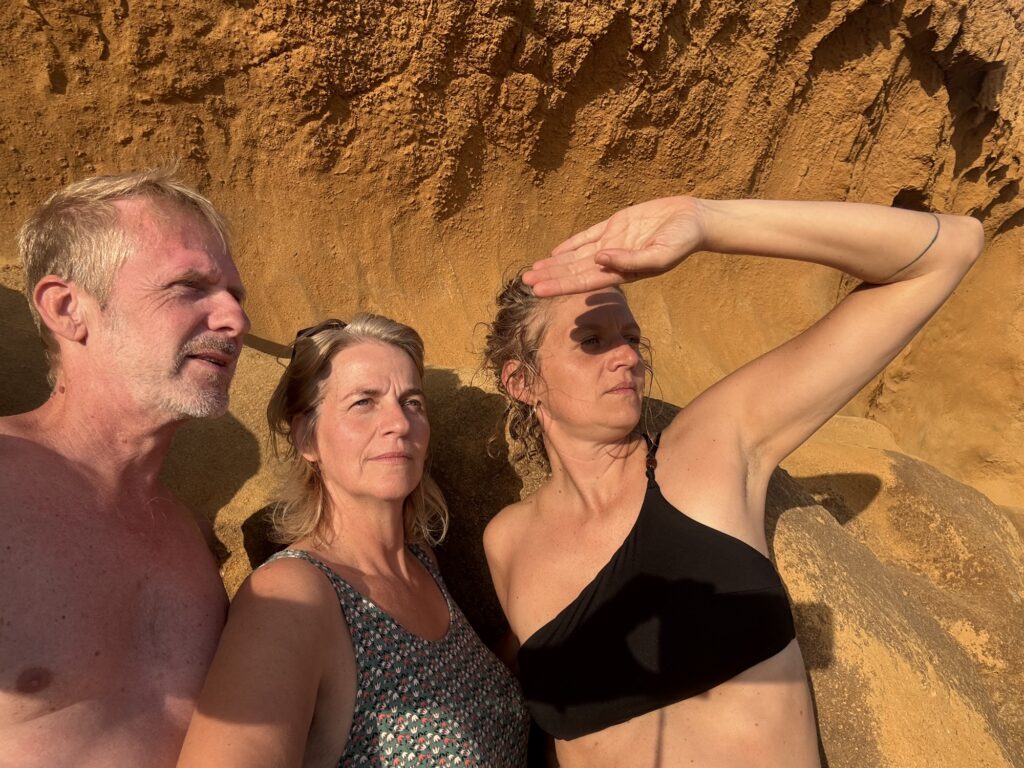
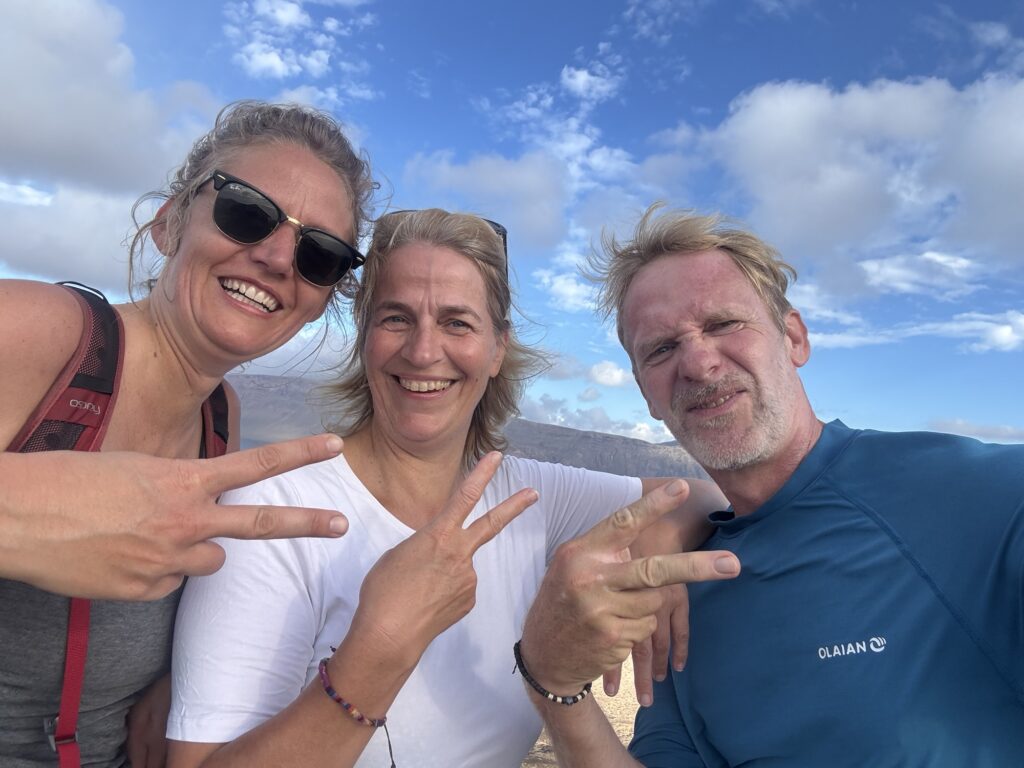
Hanna from Eberswalde came on board in Agadir in Morocco. Our first guest and a real gift! It was her dream to sail on the ocean and because we had already become very friendly in Spechthausen, we agreed that she would accompany us on the journey from Agadir to Lanzarote and the bay off La Graciosa. Hanna is also impressed by the friendliness of the Moroccans and we visit a hammam together. It was quite funny and unusual, and we were scrubbed down properly. Two beautiful, colourful Berber carpets have adorned our salon since Agadir and a Moroccan dress also had to be packed. Refuelled with diesel and water, we set sail a day later than originally planned. A wise decision, because according to the weather forecast we would have had strong winds and a big wave. Clearing out went smoothly, but we didn't leave until 2 hours later than planned. There was a good wind and the sea was ok with a wave of about 2 metres. Barely 2 hours later, dolphins appeared again. I was particularly pleased about this for Hanna, because it really is magical every time they play in front of the bow. After the dolphins, Hanna noticed the first signs of seasickness, which got worse as the day went on. She then spent several hours in her bunk and we gave her water, rusks and travel tablets. She felt better on the second day and the three of us enjoyed the sea, which also increased my joy "Shared joy is double joy", how true.

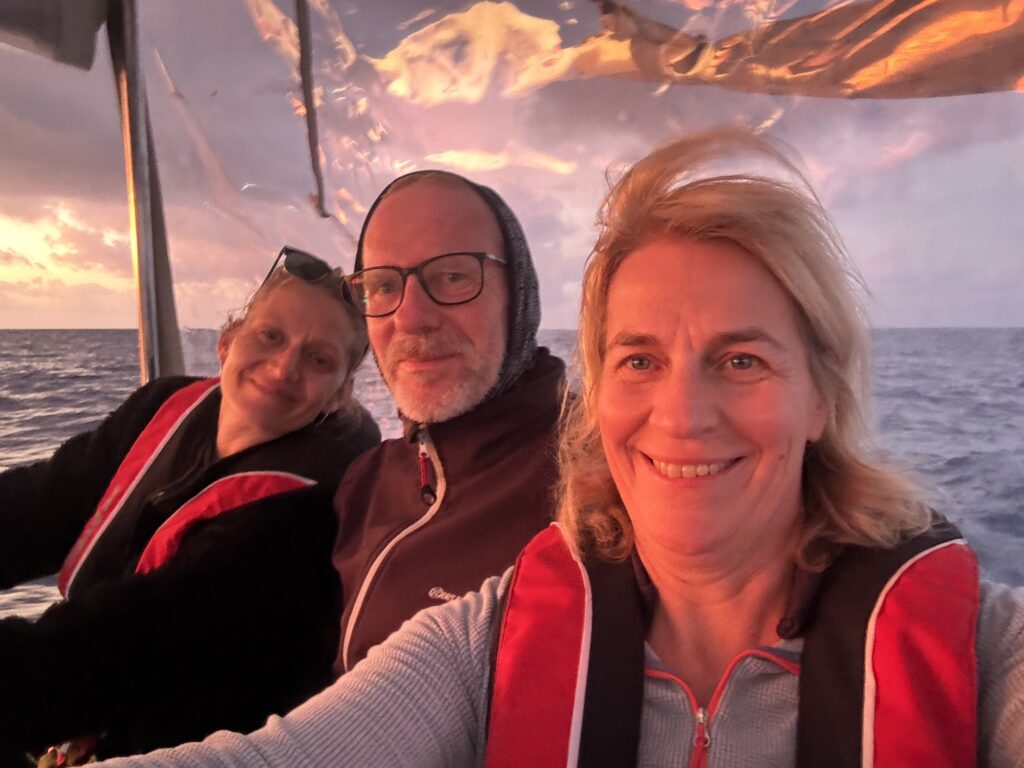
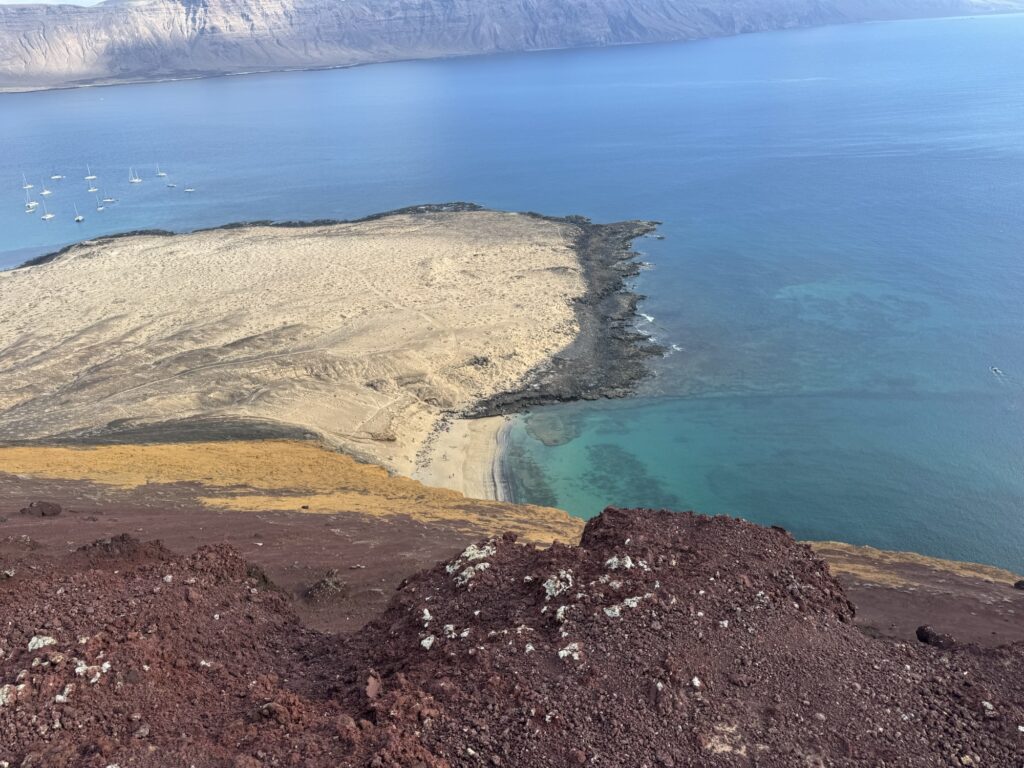
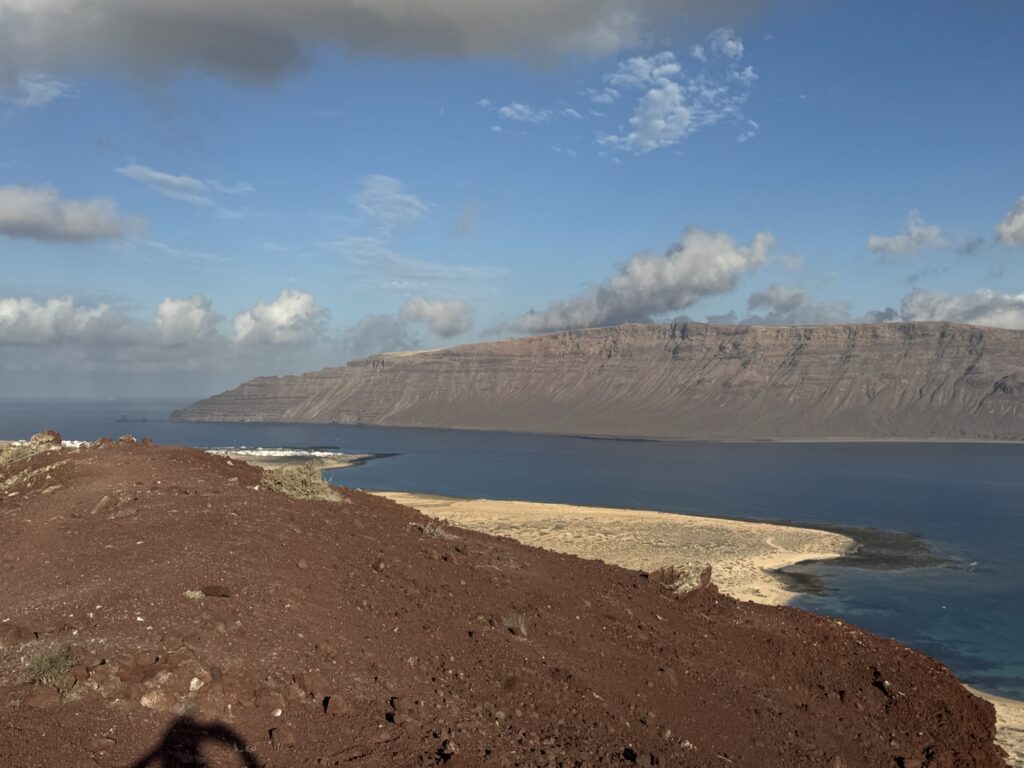
At night we reached the bay of La Graciosa, the small island off the coast of Lanzarote. During the day, we were able to admire this magical place with its bright colours of ochre, brown, black, yellow and everything in between. Up to 15 sailing boats shared the bay with us, two of which were also a "Neel 42", the same type as ours. What a coincidence, because there aren't that many Neels. They were each sailed by French families with two and three small children who were travelling the same route as us. It was a nice encounter, and since then we have kept in touch and exchanged information. We are all enthusiastic about the Neel and its sailing characteristics. So far so good and how did it happen that I was so stressed between then and now?
Hanna brought us materials from Germany because the watermaker needed to be cleaned. We needed chemicals for this, which we had delivered to Berlin and which Hanna brought us. The water we had filled up with in Agadir was of poor quality, so we let the tank run almost empty and then wanted to clean the tank with non-chlorinated water we had bought. That was the plan, but things turned out differently. The water pump didn't like the fact that the tank was almost empty, it stopped running and the second pump didn't want to either. Fortunately, we have internet on board and I was able to download the pump's construction plan, we discovered the bleed screw, which was sufficient to suck in the water on one pump, but was broken off on the other pump. After some time, Martin's ingenuity and my persistent enquiries led to the pump working without us having to remove or drill through the broken screw, as we would not have had a replacement. This took us a day and the watermaker still hadn't been cleaned. And so it went on for the next few weeks, with small and large parts disappearing and the list of things we had to buy in Arrecife (Lanzarote) and later in Santa Cruz (Tenerife) getting longer and longer. The tension was mounting, the last point in Europe where we could still buy special sailing materials. And it seemed that our Biosphera really wanted to show us all her weak points.
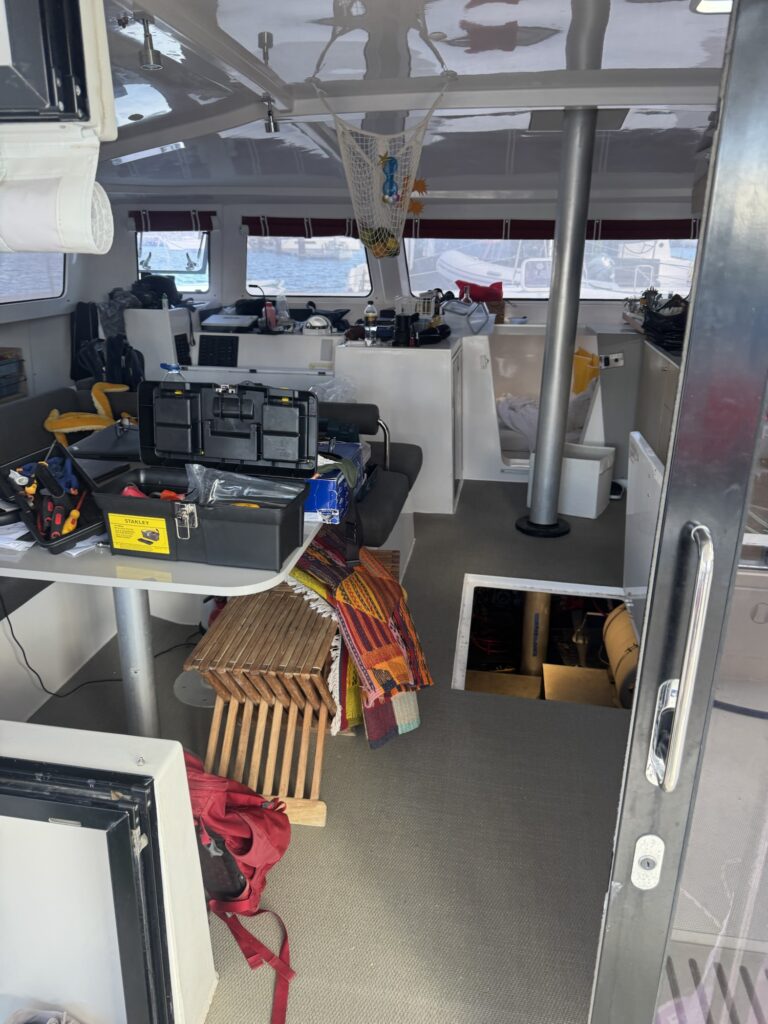

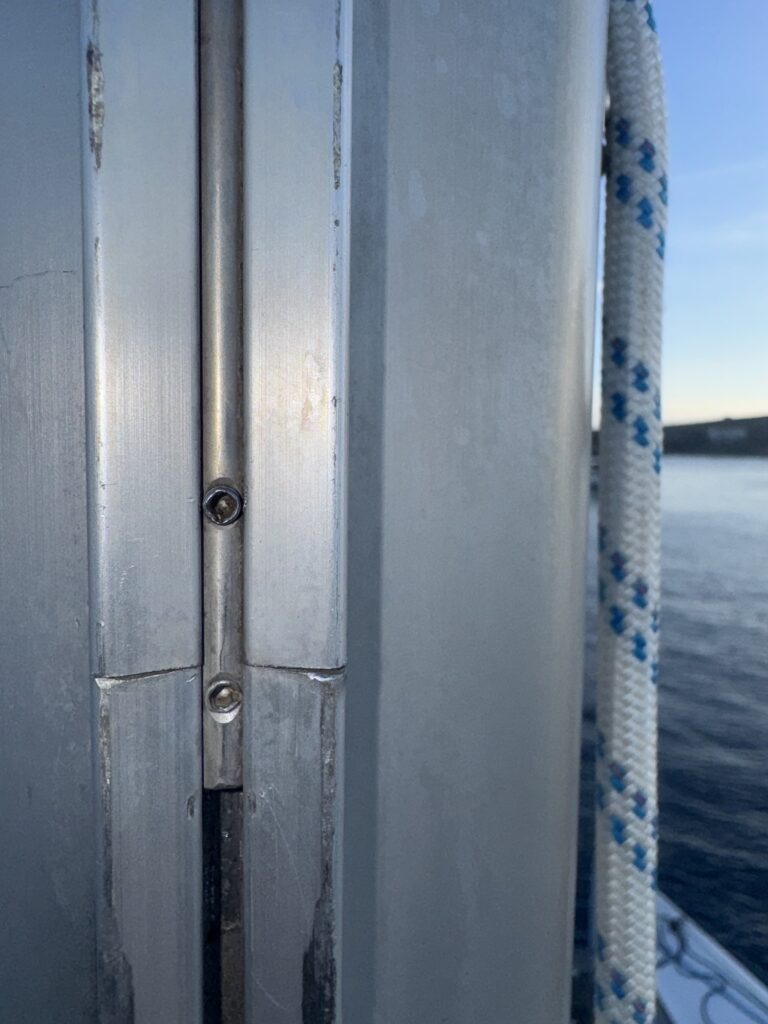
At least I now know what grub screws are and that you can't get them in stainless steel in Tenerife. You have to use stainless steel at sea, otherwise everything corrodes! Innox is the name in English and Spanish for stainless steel, an important word! And what do you need grub screws for, the small screws without heads? We needed them for the mast, or rather the guide rail for the sail, on which the mast slides sit and ensure that the sail slides up and down the mast smoothly and without jamming. So far on our trip, they have only done this at the beginning. One of them was completely lost during a night-time sail recovery manoeuvre and the topmast slider broke shortly before Tenerife. Martin already knew a really nice, competent ship handler in Terneriffa from his Atlantic crossing 5 years ago, who fortunately had these special mast slides in stock, each one costing 250.00 euros! Wow. The reason for the loss of these valuable and important parts was a gap in the rail on which the mast sliders slide. The gap is caused by the so-called inspection rail, which is a small rail that can be removed from the entire rail in order to replace the mast sliders. It is clamped in place by two nuts under the tree, but unfortunately these were not tight in our case, so that a gap was created and the sensitive mast slides, which are filled with 40 small balls, were broken. The inspection rail is pressed firmly onto the mast with grub screws. Happy that we now had new mast slides, we wanted to attach the precious parts, but unfortunately we realised that the revision rail could not be loosened, the grub screws were partially corroded and had been turned through (i.e. the head could no longer be used with a Phillips screwdriver), we tried to loosen the screws with special oil and light blows! Nothing! In the end we saw in a You Tube film that heat can help. Luckily, I was planning to whip up a delicious crème brulée on our trip, Martin's favourite dessert 😊, so I took a small kitchen torch with me. It also helps to loosen grub screws! Yeah! This device is also great for fusing line ends. We were able to remove two grub screws, but they were enough to remove the revision piece and insert the new mast sliders. We had to replace the broken grub screws first, as there were no Innox grub screws on the whole island! The new grub screws only arrived with our new crew from Germany. More about this in another blog!


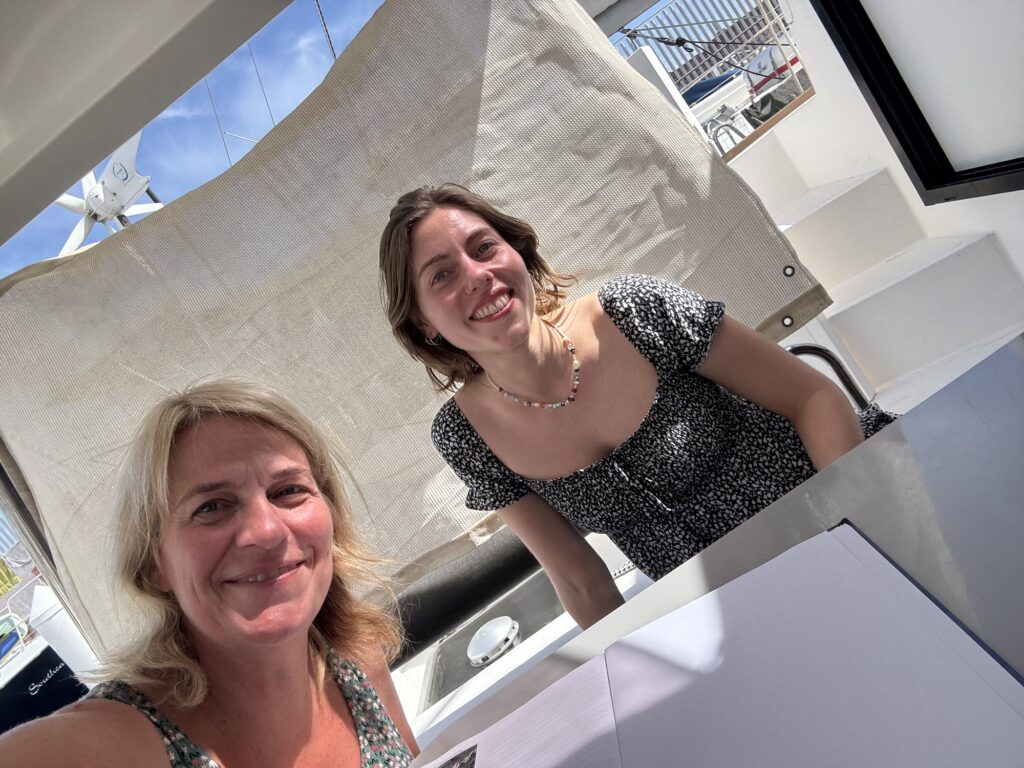
The experience with the grub screws was one of the last. At that time, we had a visitor from Eberswalde University. One of my master's students and her boyfriend visited us at Biosphera as part of her master's thesis. She is developing a podcast series to publicise the people and projects in biosphere reserves and is using this research trip as a starting point. The destination is the La Palma biosphere reserve. Alena and Nils sailed with us from Tenerife to La Palma. This gave them a deep insight into the skills that a sailing boat demands of you, how the way you travel at sea also changes your view of the land and that you can only make progress if you work together and overcome the challenges together.
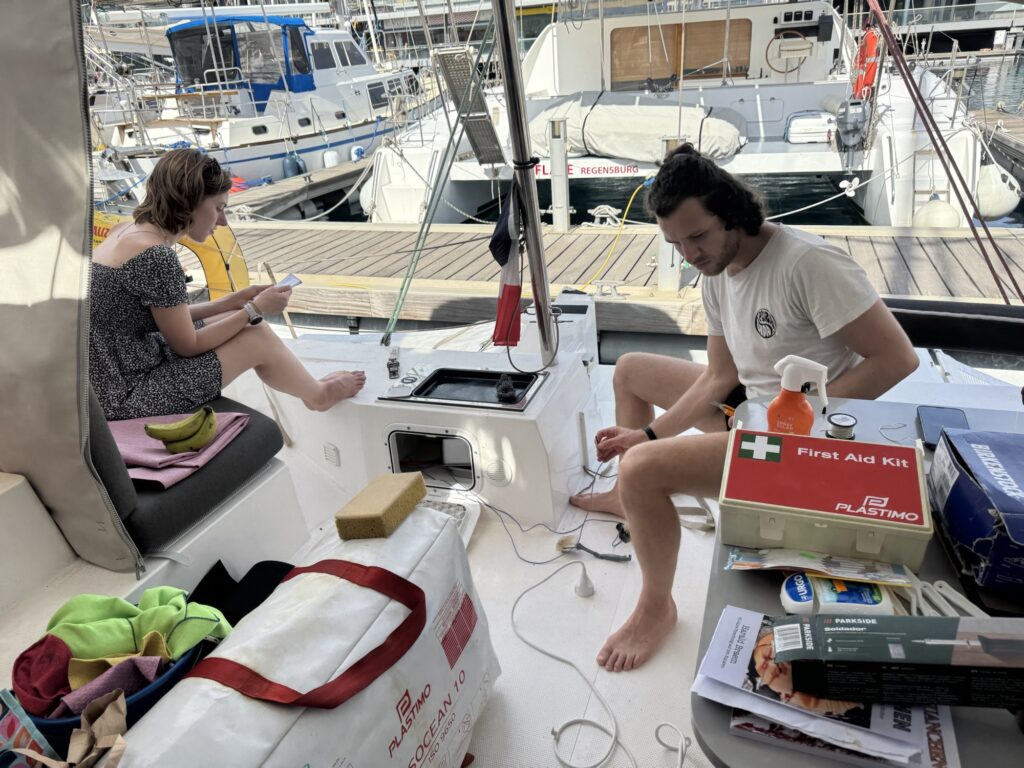
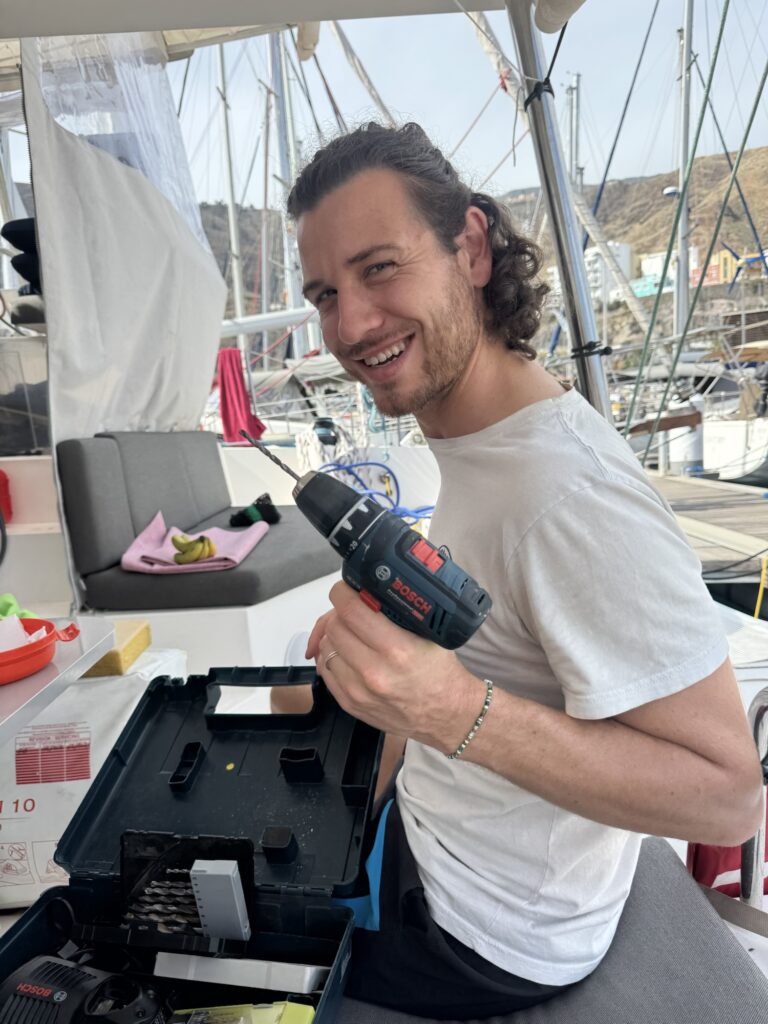
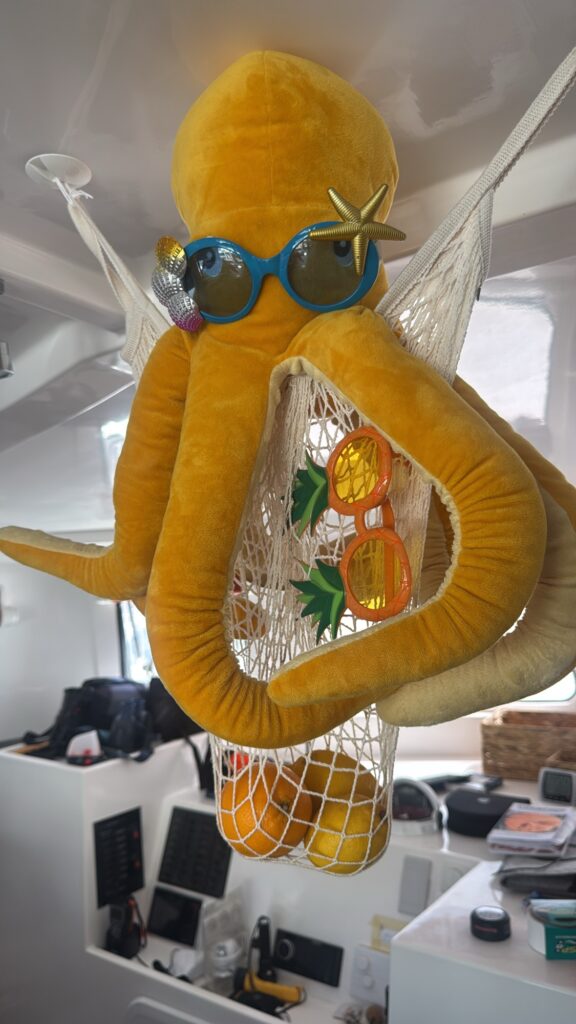
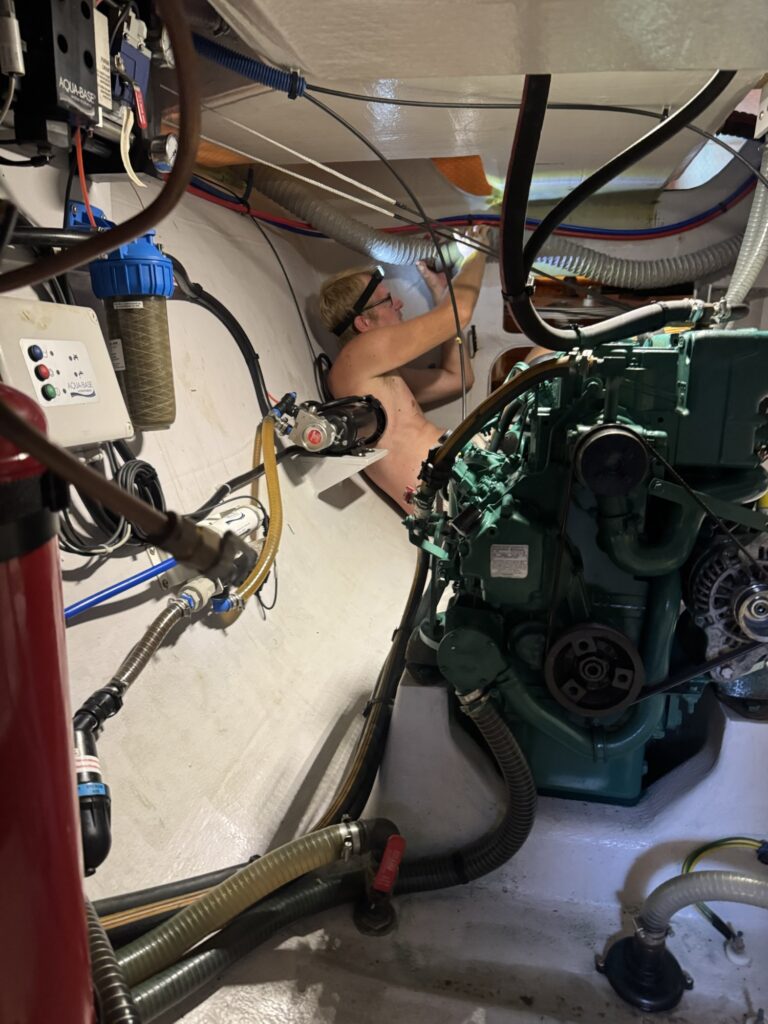
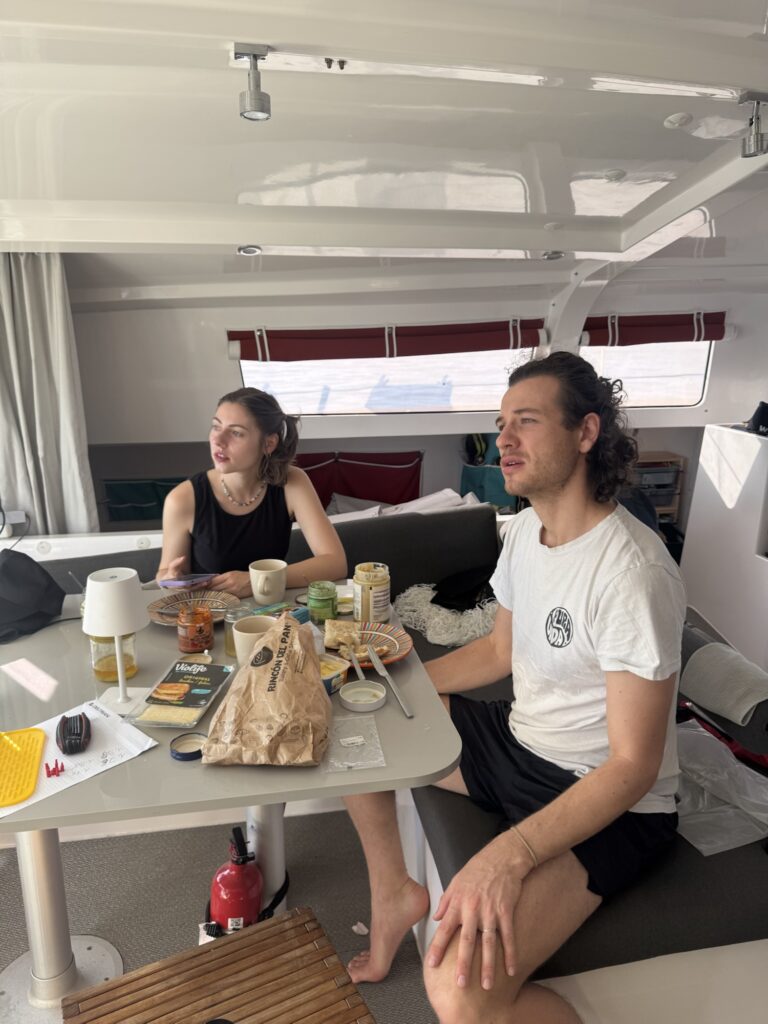
We also dealt with these challenges:
Broken steering line, water ingress in the rudder compartment, corroded gas valves, electrics and deck, extension of the rails and I'm sure I've forgotten something. Martin's phone is full of photos, with components and not picturesque holiday snaps 😊
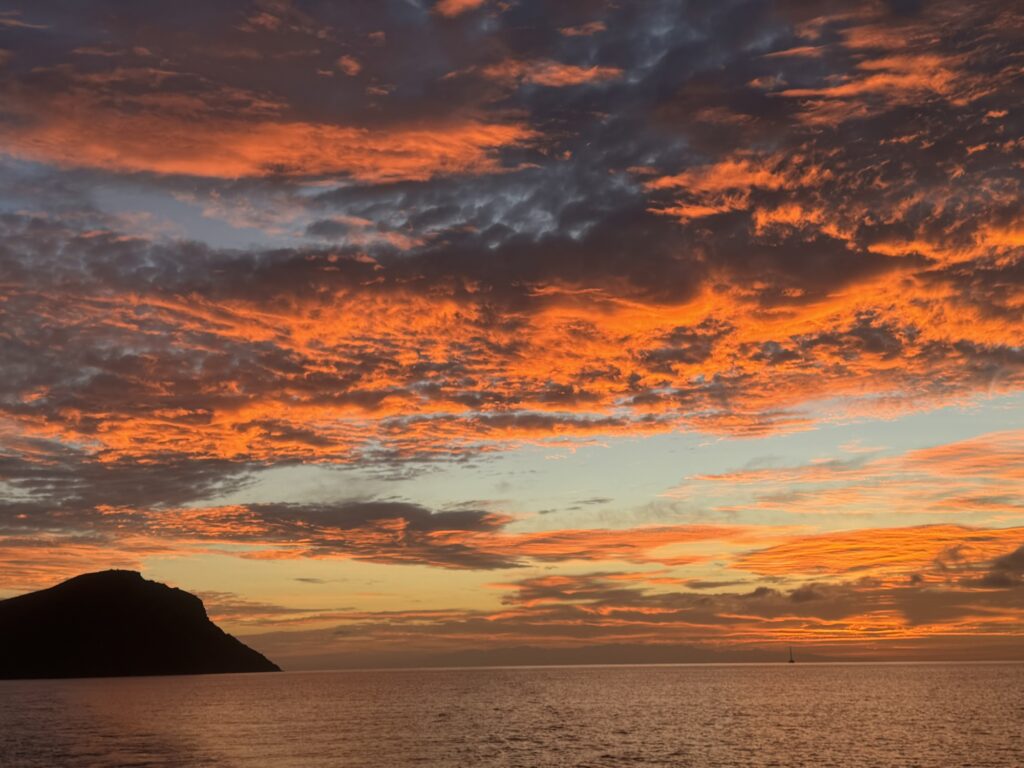
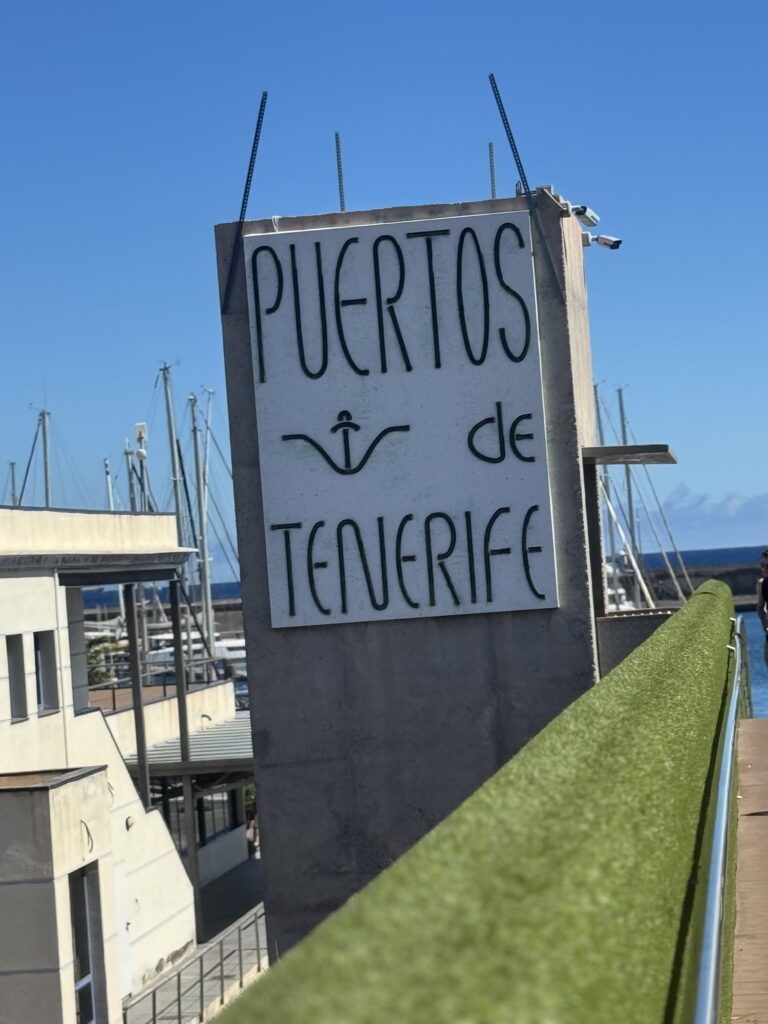
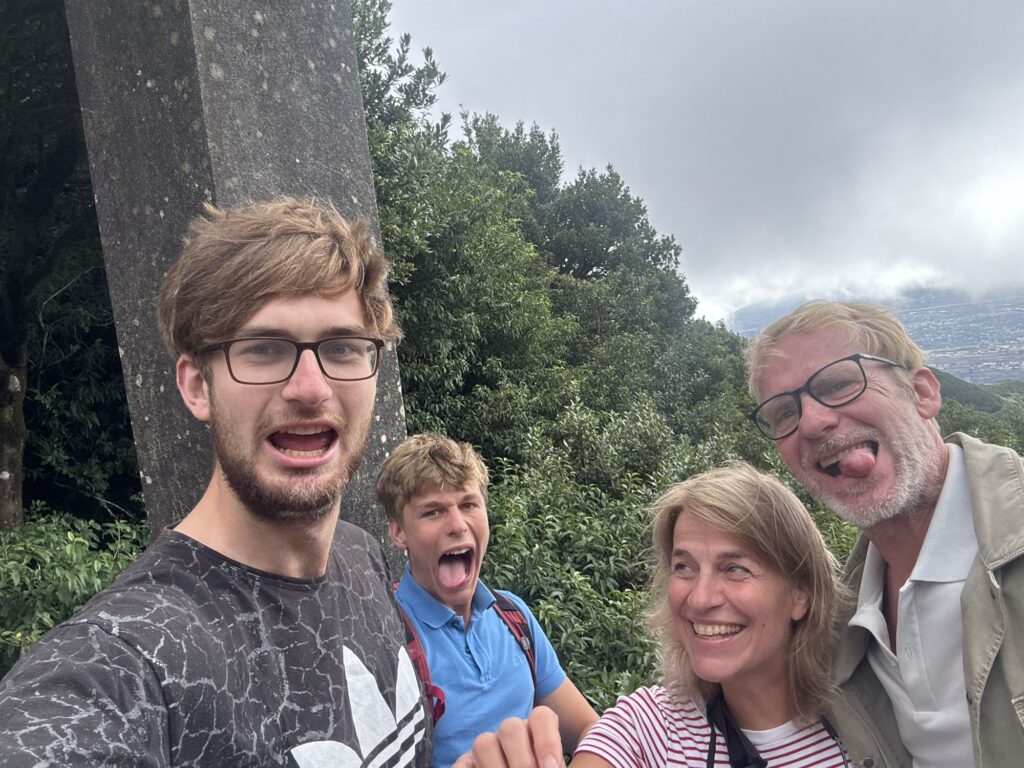
Despite the tense atmosphere, we also managed to conjure up some wonderful moments. Thanks to a visit from Martin's sons, we went diving and snorkelling extensively. My favourite toy was an inflatable kayak in a bay north of Santa Cruz (Tenerife). We used it to study the insides of various caves, which was a bit scary.

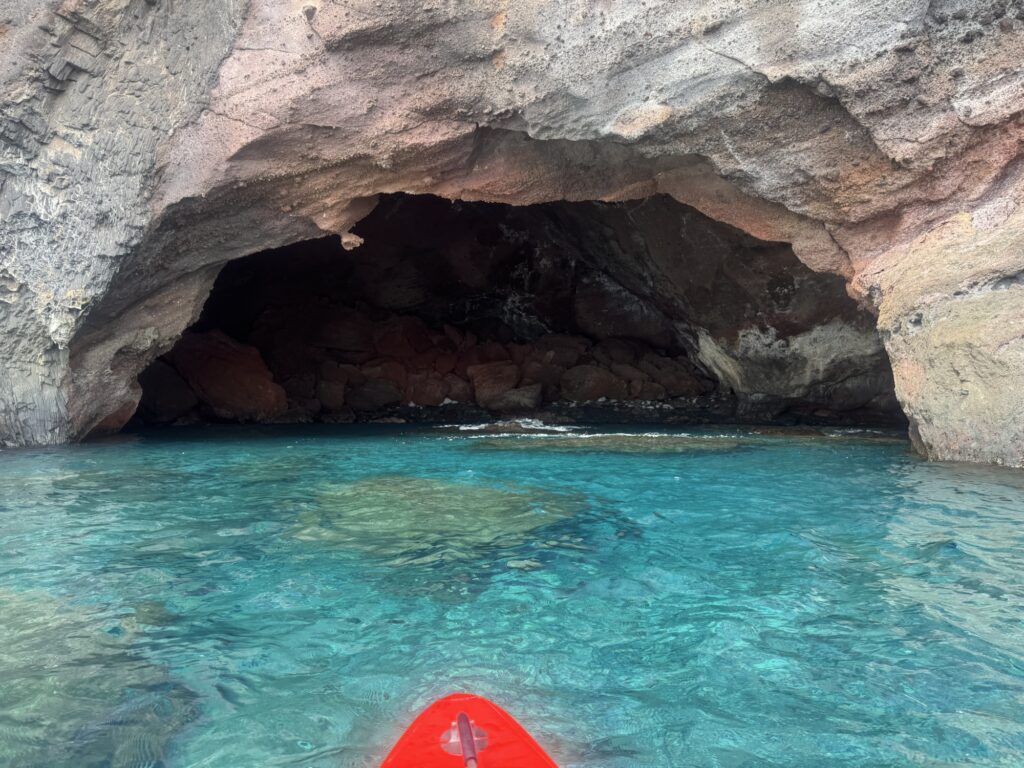
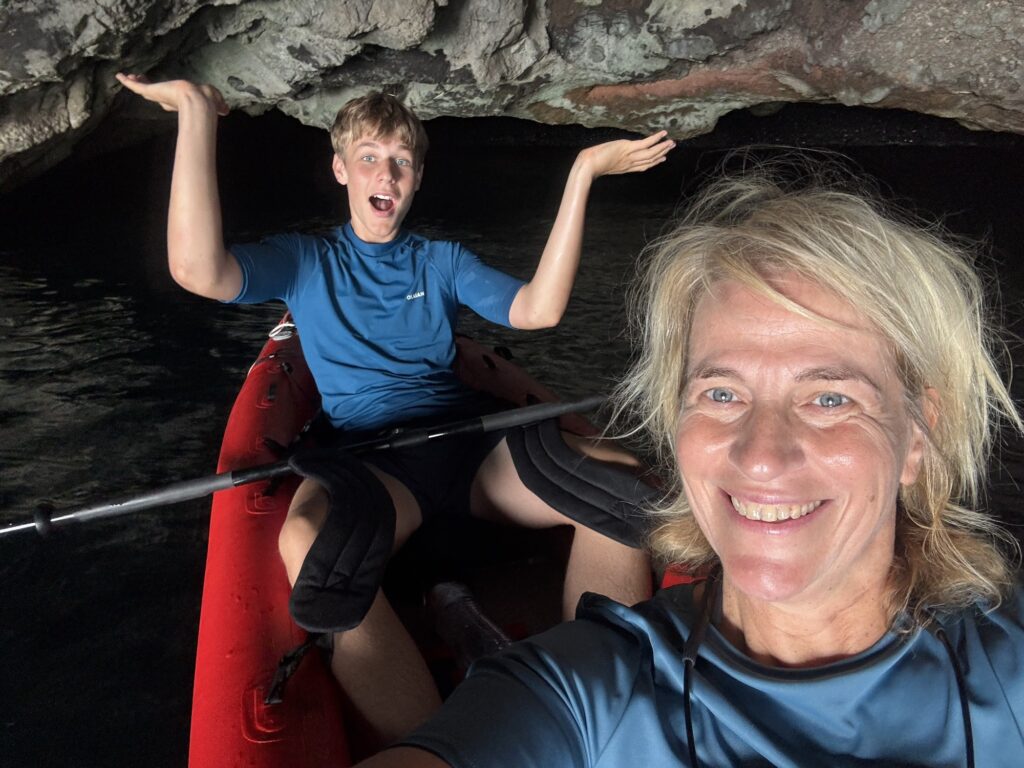

I would like to dedicate a separate blog to La Palma, because the whole island is a biosphere reserve and impressed me with its beauty, people and history.
So now I'm sitting on the Biosphera in the middle of the ocean and typing away, now it's only 494.4 miles to Mindelo (Cape Verde). We've been a great new crew since Santa Cruz (La Palma). Before we set off, we were able to complete many to-dos together. What a gift to have so many enthusiastic hands to help! There was a Post It for every task, and within two days we had grown together as a real crew while solving the tasks. Now we are enjoying the sea, the moon at night and are grateful for all kinds of good conversations.
Travelling on a sailing ship is challenging and I don't regret having embarked on this journey for a second. Mastering the difficulties and then surrendering to the elements, the wind, the water. I realise how the sea is beginning to change me. The view of our planet will never be the same after this journey.
Dear Katja, it's exciting and entertaining to read how you describe your adventures. I look forward to the sequels. Saludos cordiales Yun abrazo enorme de La Palma, Sylvia
Thanks for sailing with us from afar, it's unbelievable what can go wrong and it's impressive how you improvise.
Looking forward to the sequel, hope that everything holds up until then.
Best regards, Niki
Dear mum Katja! I'm looking forward to reading your blogs. Best wishes from down-under and always a hand's breadth of water under the keel!
Safari salama from Georg & Suzanne!
PS: ... do you also have an MMSI number?
I am impressed by your great, comprehensible reports, dear Katja.
So many beautiful impressions and interesting people around you. I'm travelling with you in my thoughts.... all the best to your mum
Dear both of you!
Thank you, Katja, for telling us in such detail about your "everyday life on board". I'm a technophile anyway and the discussion of how to loosen worn-out screws also occupies me in my workshop when repairing bicycles. But it's also easier for Susanne to "travel with you" when you describe in such detail what it takes to prepare for an Atlantic crossing. Yesterday, on 11 November, St Martin's Day, I thought a lot about you, Martin, and tried to send you my positive vibes; I hope some of them got through to you!
We very much hope that there are no further construction sites and that you will be able to enjoy the Cape.
Sincerely, Christoph and Susanne
Hello lovelies, you really are Atlantic heroes. You can already feel that this adventure is transforming you. May something wonderful come out of it, that people rediscover, honour and celebrate their deep connection with each other and with nature. May we learn that we are here to serve all beings on this magnificent planet. May your mission be a contribution to this 💖