
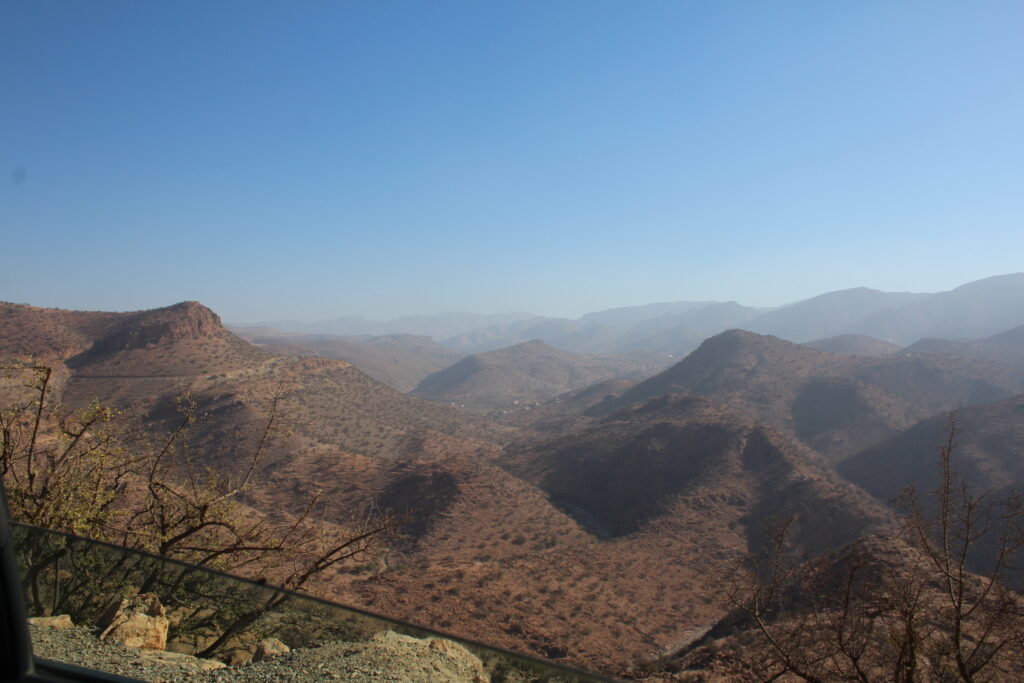
I want to write about Morocco, which is not that easy. We are now in Tenerife and so much has happened again that Morocco seems quite far away.
In Agadir, we focussed on the topic of our trip for the first time and visited the Arganeraie biosphere reserve in southern Morocco. My brother put us in touch with GIZ, who in turn passed us on to contacts in Agadir. Many thanks for that! Sulfaine and Mohammed came on board in the morning to discuss the programme with us. The fact that the contact was made via GIZ also made us realise that development cooperation is of course a source of income. The driver, who spoke a few words of English and was therefore also supposed to translate, confronted us with the daily rates that GIZ would allegedly pay, which pretty much blew our minds. After a short negotiation, we came to an agreement that was still expensive for our private travelling budget but somehow feasible and Sulfaine also seemed happy with it. Mohammed wrote Katja a long explanation, which ChatGPT translated for us, in which we explained that we couldn't afford a second consultant. That was a shame, as Mohammed knew a lot but unfortunately only spoke French. He agreed to accompany us for the first day and then withdraw, which was a good solution.
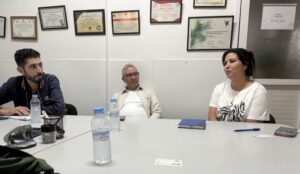
Even during this first negotiation, it became clear that the roles had now changed. Katja was the captain of this section, I was the crew. This became even clearer when we met our first dialogue partner: an association of women's cooperatives that produce argan oil and other products. The woman spoke good English and after a short time there was an intense exchange between two self-confident women, where Mohammed, Sulfaine and I were just spectators. Katja managed to create an exciting conversation and also learnt a lot of personal details. I think we men who were present were glad that we found another task in taking photos. It was impressive to see how the co-operative had given the young woman herself a perspective in the country: Her mother had prepared argan oil and she had helped as a child; she has since studied, returned and heads the association of cooperatives. Her mother still works in one of the cooperatives involved. I was most impressed by the woman's enthusiasm, which did not suffer much from the fact that argan production has fallen sharply and many cooperatives only produce a little. We heard this again and again, but never heard any complaining, which really impressed me. I find myself complaining about much less substantial issues... .
Then I went to the countryside for the first time and the change was dramatic. Morocco is poor and you can see it in the countryside. There are virtually no cars, the houses are often simple and unfinished. The first women's co-operative could not be found or had moved, but we were lucky with the second one.
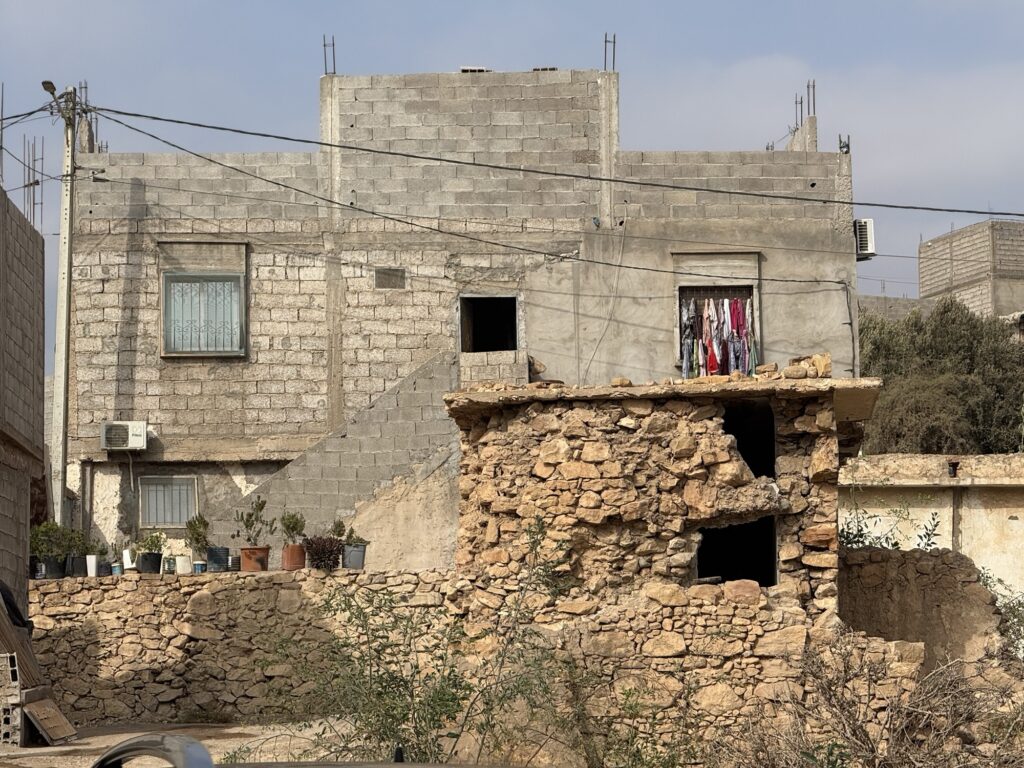
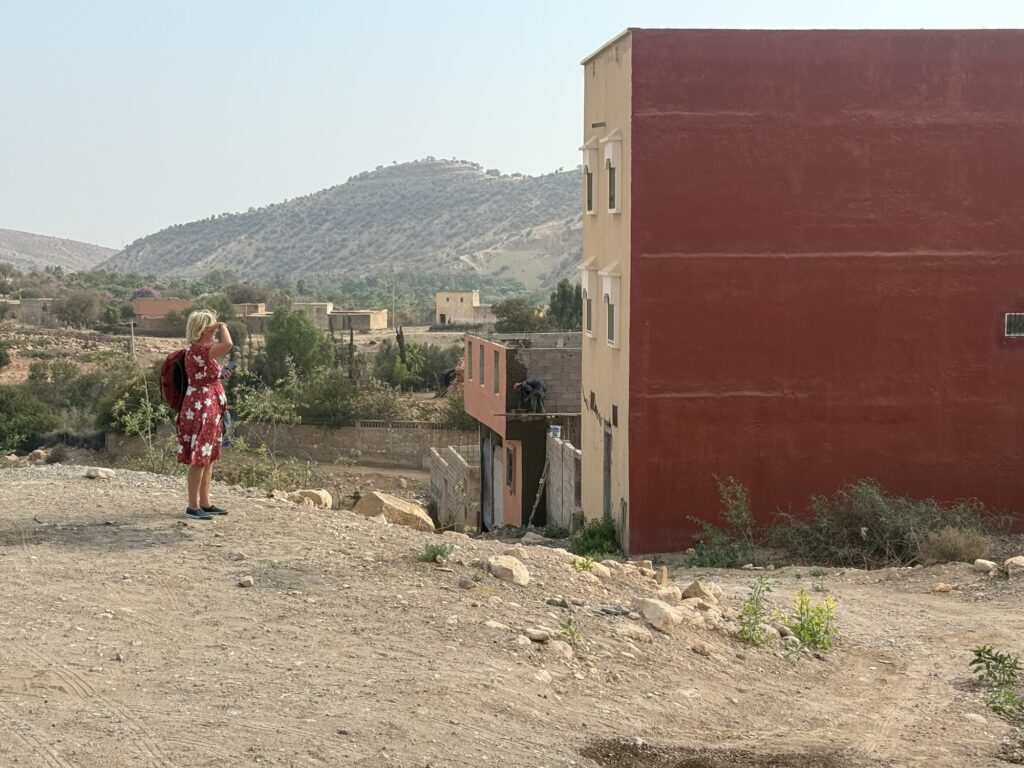
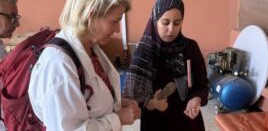
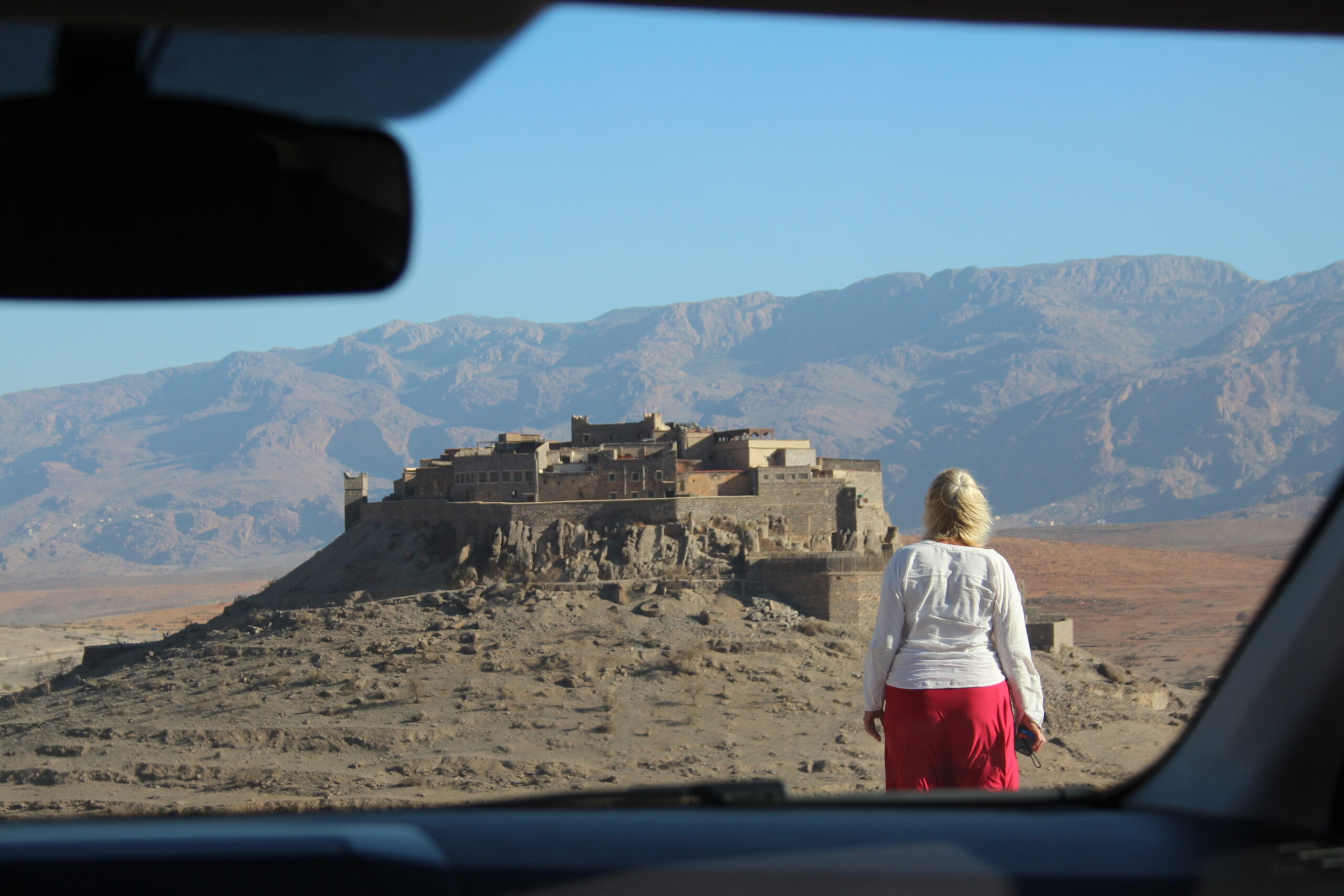
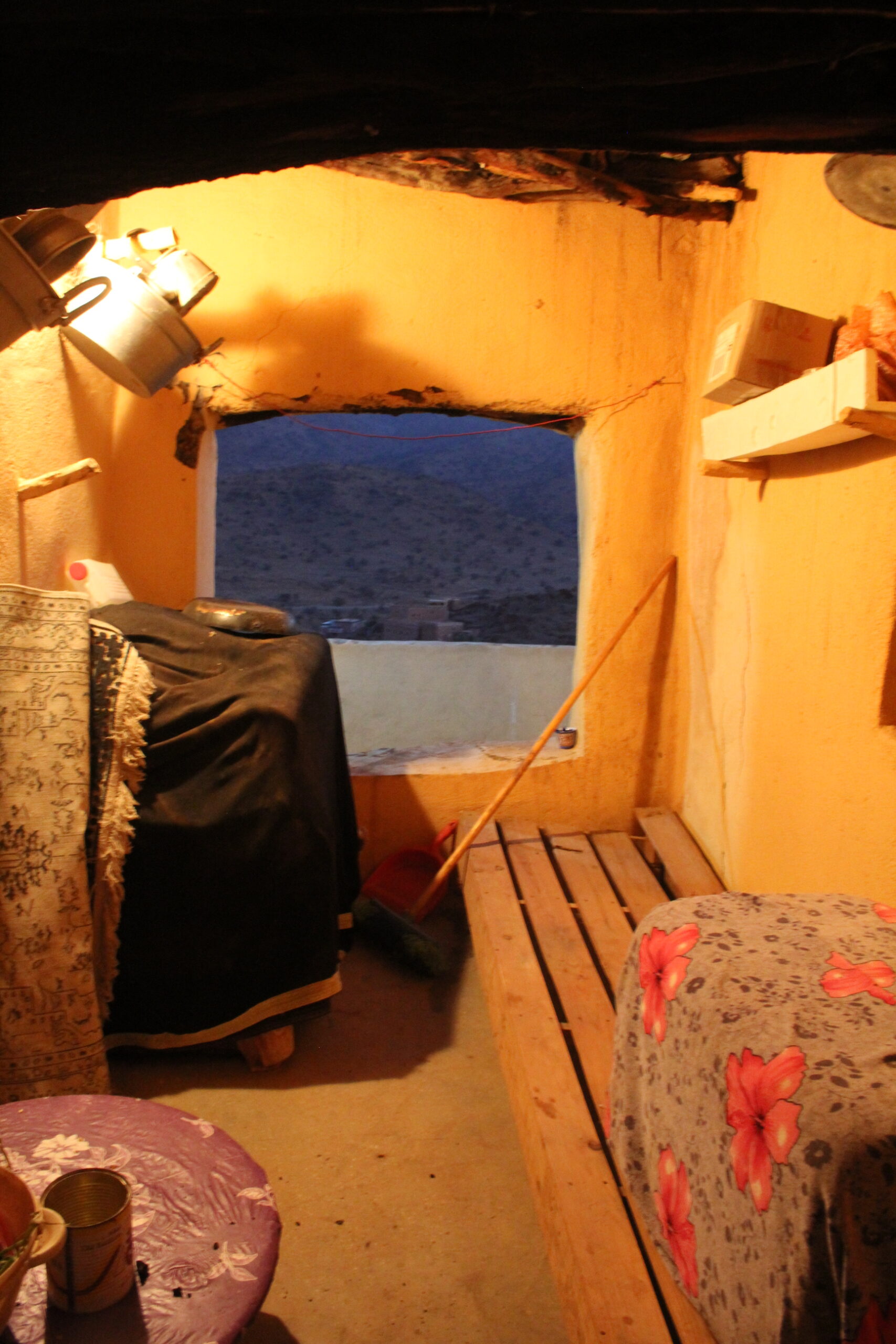
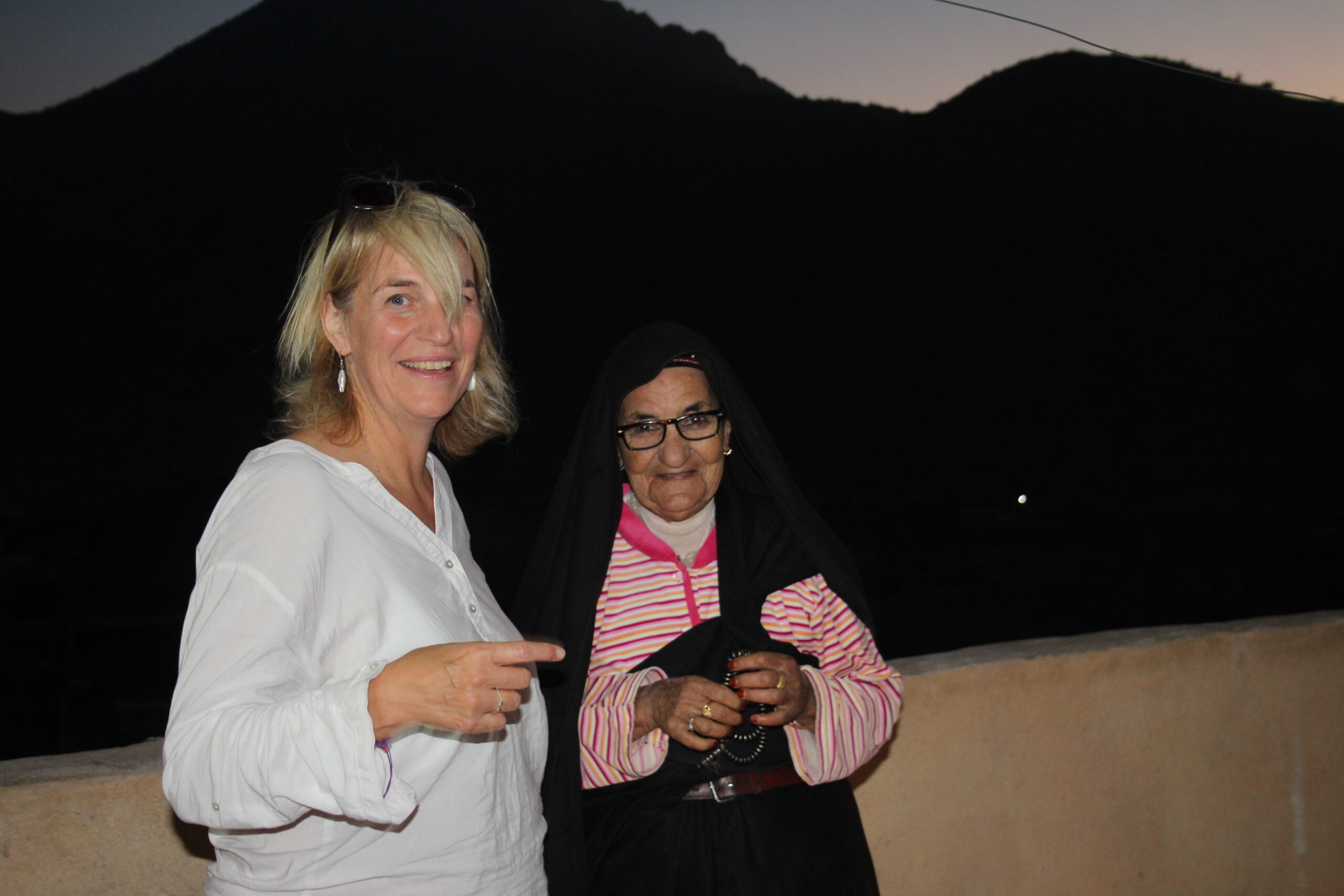
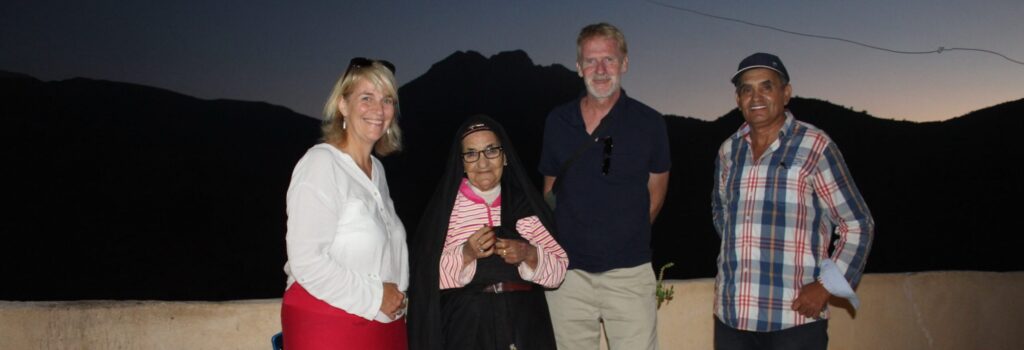
Katja organised the meeting the next day on her own and did without Sulfaine as a translator, who would have slowed down communication. Instead, we set off on day 3 on an excursion into the centre of the country, where Sulfaine proved to be a very valuable and great driver. In the late afternoon we reached Ammelne, a small town with a good water supply, which made it seem like an oasis. Here we were welcomed by a dedicated man who ran the local centre for.... Here, too, his enthusiasm was what convinced us. With wide open, shining eyes, he shared his experiences and views in Arabic without pause and did not allow himself to be interrupted by Sulfaine, who kept trying to translate a few words. We were occasionally given summaries in the form of maybe five words after a few minutes of talking. So we looked at the documentation on the walls, the models on display and let ourselves be infected by the man's enthusiasm. The excursion we went on afterwards was great. We walked through parts of the village and the water distribution system was explained to us. Even in the age of washing machines, the public washing area was in top condition, which, apart from the fact that a washing machine is not affordable for many, could be explained by the communicative aspect of the place. Each woman had a small area, separated by a 20cm high wall, into which water was fed. So about 8 women could wash and chat together. At the end, we visited our host's aunt, who was about 90 years old and seemed fit and cheerful. She probably didn't live much differently to people 100 years ago and we had the privilege of visiting her house. I had already noticed that all the houses in the country were actually multi-storey and now I learnt why: the lowest level housed animals and there was a level above where food was stored. In winter, a fire was lit here and this level was also used for the family to stay. Above that were the kitchen, bedrooms and the terrace. The ceilings were around 2 metres high and the doors and stairs were approx. 1.70 metres high. Clay or loam as a building material ensured good building physics and good heat storage, so that it was easy to imagine that the heat could be retained well in winter and it remained reasonably cool in summer. Overall, the village seems to be doing quite well thanks to the water supply, but I didn't realise whether the fact that everything is located in a biosphere reserve has any influence on this. In any case, students here could learn a lot about traditional functional architecture and community resource management (water).
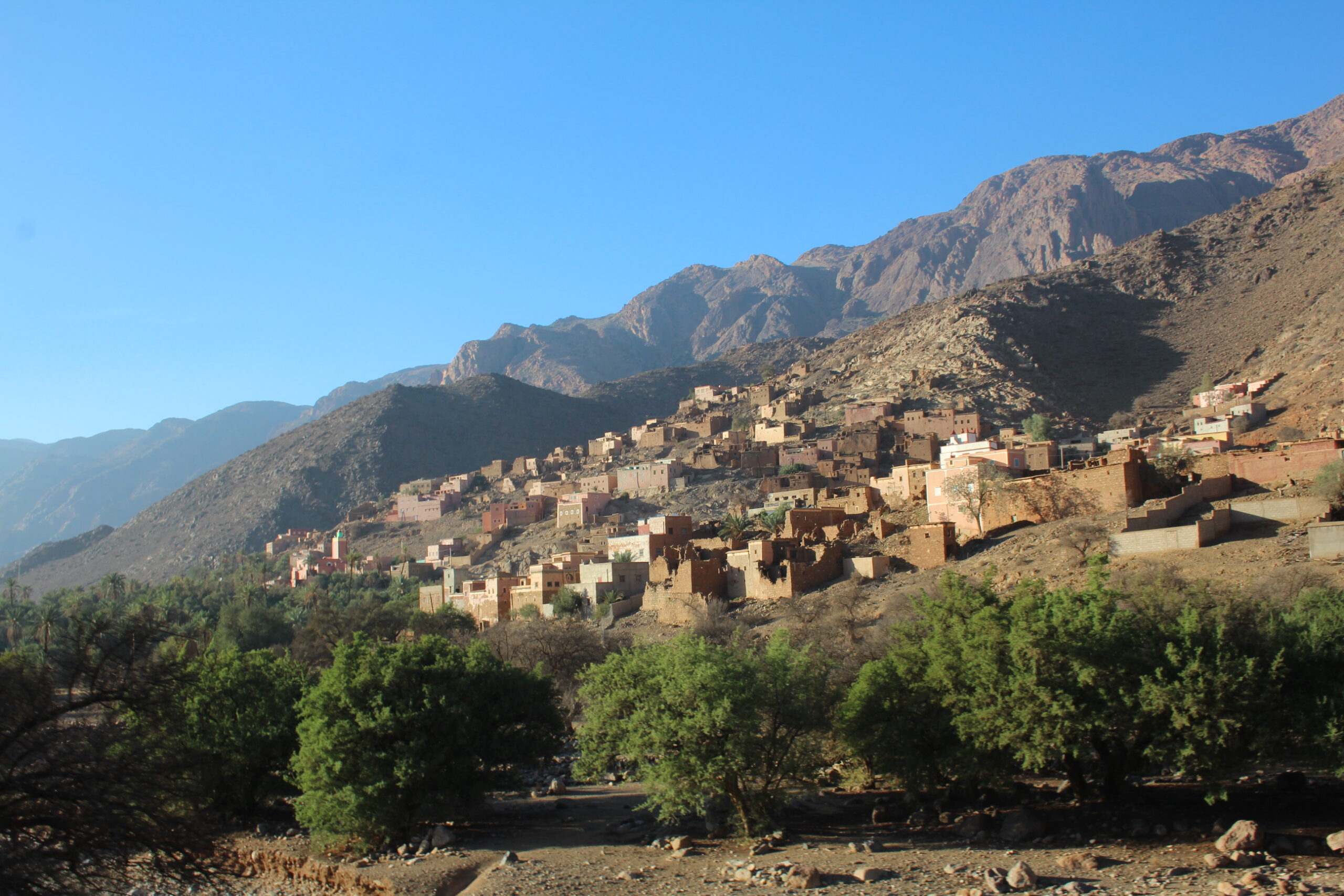
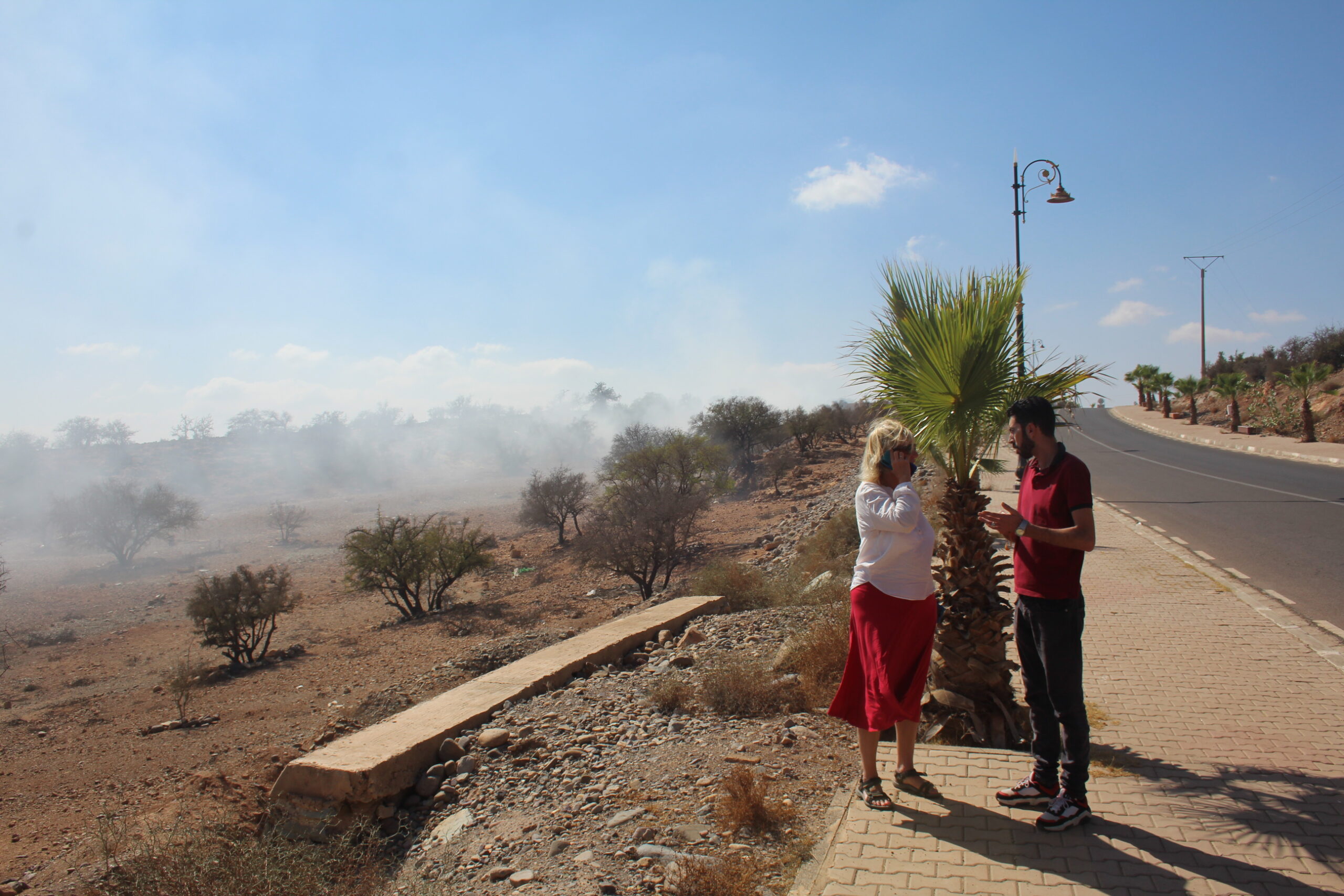
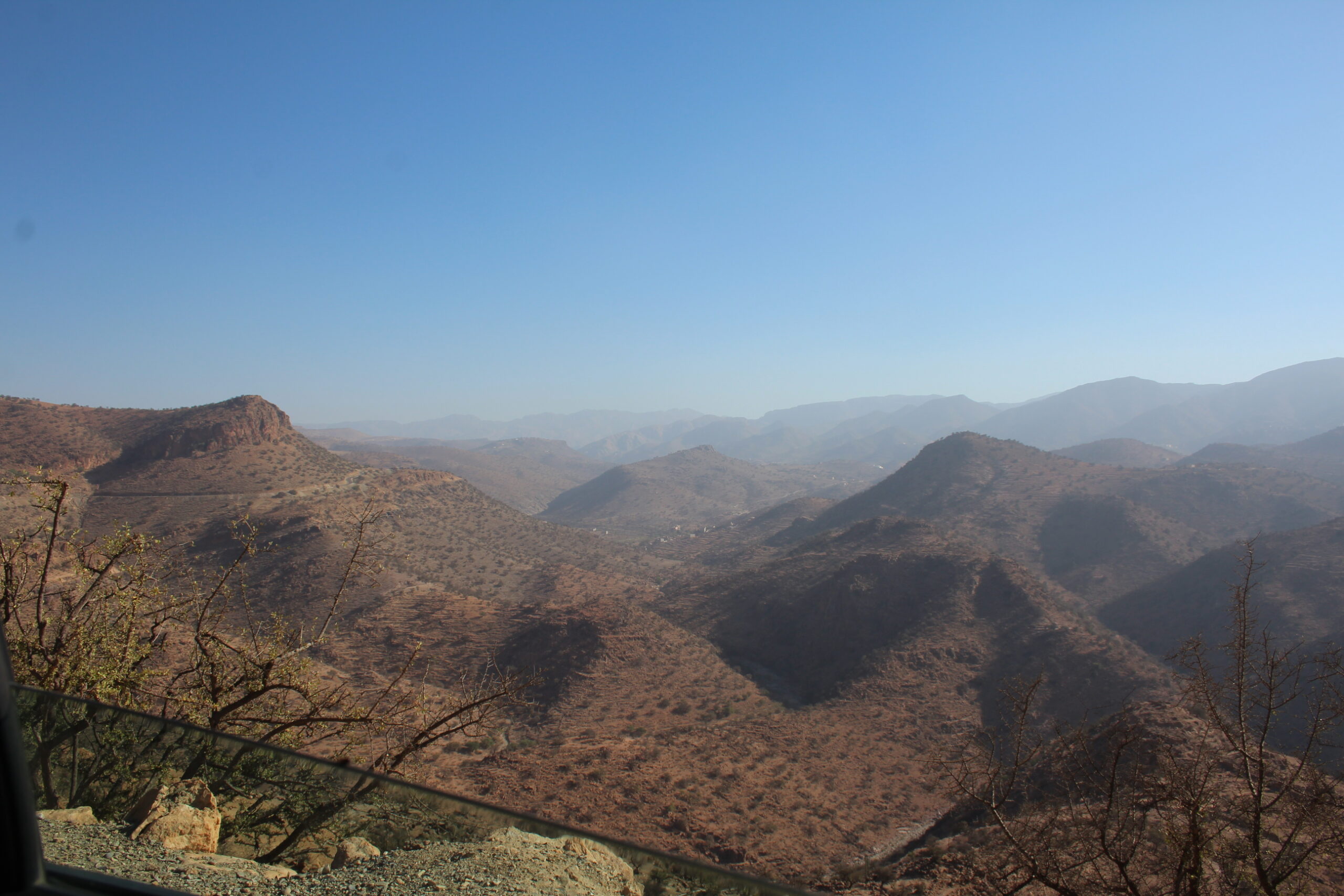
The next morning, we were once again welcomed by a women's cooperative. This time there were around 10 women, some with children, there to welcome us. At first we were eyed a little shyly and communication was a little slow due to the Sultaine translation. Nevertheless, after a short time, Katja managed to establish a direct line to the women and what was not exchanged via head and language was communicated via the heart. So while I ate the food that the women had prepared with Sultaine and two important men who had introduced us, I heard Katja laughing in the next room, where there was nothing to eat but obviously more fun. This women's co-operative is also suffering greatly from the fact that the argan trees have produced very little fruit due to a lack of rain and argan oil production has fallen sharply as a result. The women are now looking for new fields of activity, e.g. in the production of couscous. When I look at the effort that goes into the production of argan oil and the price that is ultimately paid for it, I almost feel ashamed to buy the product. However, in addition to earning money, the women seem to be primarily concerned with a task outside the home and working together in the co-operative creates social interaction and gives the women a better position in the village community. It seemed to me, at least, that it was perfectly all right even if a lot of work in the manual production of kuskus leads to little profit, the main thing is that the cooperative survives. This cooperative also seemed to be well networked, at least it had some new machines, some of which were provided by GIZ or other organisations. However, I wondered what would happen to the social objectives of the co-operative if it was no longer 8 women crumbling couscous with their hands side by side, but a fancy stainless steel machine instead. Perhaps this is the reason why some of the machines were still in their original packaging despite being 5 years old. But I don't want to be nonsense. GIZ played a major role in the establishment of the biosphere reserve and has supported a number of women's cooperatives. What all the cooperatives seem to lack is water. It hasn't rained properly for two years and even the hardy argan tree needs water to produce fruit. It stands to reason that climate change is having an impact on the rain, but perhaps there have also been periods of drought in the past. As a visitor, however, I notice that there is a royal palace in every major city; in Agadir alone there are two, surrounded by large green parks that are not accessible to the population. The main roads from the airport into the city are lined with lush green strips and there is no shortage of golf courses either. So water seems to be available but poorly distributed. Of course, the effort required to channel the water into the mountainous regions of the hinterland is enormous. Large stadiums are currently being built for the Africa Cup and the 2030 World Cup. So there also seems to be funding available for infrastructure projects. I keep thinking about our boat: we use solar energy to desalinate seawater and there is plenty of sun and sea in Morocco. Couldn't it be possible to do this on a large scale and pump at least some water to more remote areas? And as positive and inspiring as the cooperatives are: without water, nothing will work in the long term and the exodus of young people from rural regions and then possibly abroad will continue. We talk a lot about this with Sultaine, who also openly shares his doubts. However, he is just as reluctant to criticise the king's policies as other people in the country. The fear of consequences is too great and we also notice the large police presence. I am all the more impressed by how warm and friendly the people are.
Thanks for sharing Martin, it's always exciting to read about you and your experiences and thoughts. I think it's good that you ask questions and make assumptions instead of passing judgement. Travelling only ever reveals an excerpt. But how great that you can delve so deeply into the culture with your projects and Katja's research.
Looking forward to more.